
Online publication date 19 Sep 2025
A Framework to Promote Digital Inclusion for Students with Disabilities in Government-Funded Universities
Abstract
This study investigated digital inclusion for Students with Disabilities in government-funded universities in Kenya and proposed a framework to address existing gaps. A qualitative research design was employed, drawing on semi-structured interviews with thirty purposively selected librarians from six public universities: Kenyatta, Egerton, Maseno, South Eastern Kenya, the Technical University of Mombasa, and Garissa. NVivo software supported data management, while thematic analysis guided the identification of recurrent patterns. Findings indicate that, despite institutional efforts to promote inclusivity, systemic barriers persist. Policies on disability inclusion are inconsistently enforced, financial and infrastructural support remains insufficient, and available assistive technologies are outdated or poorly integrated. Limited provision of alternative content formats, underutilization of built-in accessibility features, inadequate user training, and weak feedback mechanisms undermine equitable access to digital library resources. These challenges demonstrate the need for a context-specific framework that strengthens monitoring and evaluation, enhances staff capacity, fosters interdepartmental collaboration, and ensures sustainable policy support. The study contributes to the literature on digital inclusion by moving beyond accessibility models to propose a framework rooted in empirical evidence from a resource-constrained context. Theoretically, it enriches understandings of how digital environments can both enable and hinder participation. At the policy level, it underscores the urgency of aligning institutional practices with global accessibility standards, including the Web Content Accessibility Guidelines and the Marrakesh Treaty. Practically, it offers librarians and university administrators actionable strategies for advancing equitable access, positioning them as key actors in fostering inclusive digital environments.
Keywords:
Inclusive Education Policy, Higher Education Libraries, Information Equity, User-Centered Services, Capacity Development, Accessibility Standards1. Introduction
1.1 Background
The pursuit of inclusive education has become a concern for higher education systems worldwide, with universities increasingly expected to provide equitable access to learning opportunities for all students, including those with disabilities. Digital technologies have transformed how academic libraries deliver knowledge, reshaping the landscape of teaching, learning, and research. However, this transformation has also highlighted barriers for students with disabilities (SWDs), particularly in resource-limited contexts such as many government-funded universities in Africa (Kiruki & Mutula, 2023). Libraries, as central academic hubs, are charged with facilitating equitable access to digital resources, yet evidence suggests that inclusion remains uneven and fragmented (Were et al., 2022; Wang & Si, 2024).
In Kenya, there has been a transformation in response to policies promoting inclusivity and technological innovation. National legal frameworks, including the Persons with Disabilities Act (2003), the Universities Act (2012), and more recently, the Government of Kenya’s (2025) directives on disability inclusion, provide an enabling environment for universities to implement inclusive practices (Kiruki & Mutula, 2023). Nonetheless, gaps in policy enforcement, infrastructure provision, and institutional support mechanisms remain (Abuya & Githinji, 2022; Karanja et al., 2021). University libraries are expected to play a vital role in bridging these gaps by providing accessible digital resources, integrating assistive technologies, and fostering an inclusive digital culture. Nevertheless, the extent to which these expectations translate into practice has not been explored.
The growing body of global scholarship underscores the centrality of institutional support structures in fostering digital inclusion. For example, Amponsah and Bekele (2023) argue that while digital technologies have the potential to enhance learning for SWDs in Ghana, institutional responsiveness and staff preparedness are critical determinants of success. Similarly, Dabi and Golga (2024), in their study of Haramaya University in Ethiopia, emphasize that inclusive digital frameworks cannot thrive without institutional commitment and continuous monitoring. In Kenya, Luvale (2022) highlights that despite growing awareness of accessibility, organizational attitudes and fragmented institutional practices continue to hinder progress. These observations suggest that while policies and aspirations may exist, the implementation process within universities remains inconsistent and often reactive.
Given these gaps, the present study investigates digital inclusion for SWDs in government-funded university libraries in Kenya, focusing on institutional policies, staff competence, interdepartmental collaboration, monitoring and evaluation mechanisms, and the design of an inclusive framework. This approach acknowledges that digital inclusion is not a single-dimensional process but an ecosystem requiring supportive policies, competent staff, coordinated institutional action, and robust feedback mechanisms. The University of Nairobi was selected for piloting this research because of its status as Kenya’s oldest and largest public university, its relatively well-developed library infrastructure, and its role as a benchmark institution whose practices influence other universities in the country. By situating the study in this context, the findings contribute to ongoing debates on equity in digital access and provide evidence for strengthening inclusion in Kenyan universities and beyond.
The role of institutional policies in shaping digital inclusion cannot be overstated. Universities often operate within national legal frameworks, but the translation of these frameworks into actionable institutional policies varies. In Kenya, while disability inclusion policies exist at the national level, their enforcement within universities is uneven. Abuya and Githinji (2022) note that although public universities are required to provide accessible learning environments, compliance remains superficial, with limited attention to the digital domain. Similarly, Karanja et al. (2021) argue that inclusive education policies in Kenya are articulated but poorly integrated into academic participation structures, resulting in tokenistic rather than transformative inclusion. Comparative research from Ethiopia (Fenta et al., 2023) shows that when regulatory frameworks lack enforcement mechanisms, universities struggle to prioritize accessibility, leaving SWDs dependent on informal support networks. In contrast, studies from China (Wang & Si, 2024) highlight how policy clarity, backed by accountability structures, can enhance digital literacy and inclusion. These insights suggest that the presence of policies alone is insufficient; their enforcement and alignment with institutional realities determine their effectiveness.
Alongside policies, staff competence and training play a decisive role in shaping digital accessibility. Libraries and ICT departments are often the first points of contact for SWDs seeking access to digital resources. However, without adequate training, staff may lack the skills to support diverse needs. Ditlhale and Johnson (2022) observe that in Botswana, inadequate staff preparation undermined the implementation of otherwise promising digital initiatives. In Kenya, similar challenges have been reported: Luvale (2022) points out that while some universities have invested in digital resources, staff often remain ill-prepared to integrate assistive technologies or guide SWDs in their use. Conversely, evidence from Ghana (Amponsah & Bekele, 2023) suggests that structured staff training can significantly improve the capacity of academic libraries to serve visually impaired students. This aligns with Othman and Al Mutawaa’s (2023) findings in the Gulf context, where continuous professional development was found to be essential for sustaining digital inclusion. Thus, the competence and preparedness of staff stand as critical enablers or barriers to achieving digital equity in libraries.
Interdepartmental collaboration represents another cornerstone of inclusive digital service provision. Universities are complex institutions where multiple departments, including libraries, ICT units, disability offices, and academic faculties, must work together to deliver integrated support for SWDs. However, as Beyene et al. (2023) note, the absence of structured collaboration often leads to duplication of effort, inefficiencies, and exclusionary practices. In Kenyan public universities, collaboration is frequently ad hoc, triggered by complaints rather than proactive planning (Cherotich et al., 2024). For instance, while libraries may provide some assistive technologies, ICT departments may not ensure compatibility with university systems, and disability offices may lack input in digital resource design. Studies from Kazakhstan by Assanbayev and Makoelle (2024) demonstrate that when collaboration is formalized and interdepartmental roles are clearly defined, inclusion practices are significantly strengthened. This suggests that in Kenya, addressing structural silos is essential for building a coherent ecosystem of support.
Monitoring and evaluation (M&E) mechanisms form the backbone of sustainable digital inclusion. Without systematic assessment, universities cannot determine whether their interventions are effective or responsive to student needs. Salahuddin (2022) highlights that in many higher education settings, digital inclusion initiatives often stagnate because institutions lack frameworks for continuous evaluation. In Kenya, Were et al. (2022) point out that compliance with international treaties such as the Marrakesh Treaty requires not only the availability of accessible formats but also mechanisms for regular monitoring to ensure that resources remain relevant and usable. Zaid et al. (2024) argue that effective M&E requires both quantitative indicators (such as usage statistics) and qualitative feedback (such as user experiences). Evidence from Ethiopia by Dabi and Golga (2024) reinforces this, showing that when universities introduced systematic evaluation processes, staff accountability improved, and SWDs reported enhanced access. However, in most Kenyan public universities, M&E of digital inclusion remains sporadic, leaving critical gaps in responsiveness and accountability.
Ultimately, the absence of coherent policies, limited staff training, weak collaboration, and inadequate monitoring collectively undermine digital inclusion in Kenyan universities. Addressing these gaps requires not only identifying weaknesses but also proposing a framework that integrates these components into a holistic strategy. The literature emphasizes that inclusive frameworks must be dynamic, context-specific, and responsive to evolving technologies. Smadi (2022) argues that a successful framework requires balancing global best practices with local realities, while Alaban (2024) stresses the importance of embedding feedback loops to ensure continuous improvement. In Kenya, the National Council for Persons with Disabilities (NCPWD, 2024) acknowledges that existing frameworks inadequately address the specific digital needs of SWDs, calling for more comprehensive institutional strategies.
In this light, the present study seeks to advance both theory and practice by proposing a framework tailored to the Kenyan university context. By integrating insights from global and regional scholarship with empirical evidence from government-funded universities, the study positions itself to fill a critical gap in the literature. It argues that digital inclusion is not simply about making resources available but about creating an enabling institutional environment characterized by enforceable policies, competent staff, collaborative structures, effective monitoring, and continuous adaptation. Such a framework is essential for ensuring that SWDs are not accommodated but empowered to participate in the digital academic environment.
1.2 Statement of the Problem
Despite legal provisions and institutional commitments to inclusive education, SWDs in government-funded universities in Kenya face barriers to accessing digital library resources. The current landscape is characterized by the weak enforcement of existing policies on disability inclusion, inadequate financial and infrastructural support, and limited access to modern assistive technologies. While some universities have made notable efforts, these initiatives are fragmented and fail to address the systemic challenges. There is a gap in the implementation of continuous monitoring and evaluation frameworks, staff capacity building, interdepartmental collaboration, and sustainable policy support. These shortcomings undermine the inclusivity of digital library resources, resulting in unequal access to information and educational opportunities for SWDs. This study, therefore, addresses these gaps by proposing a comprehensive, context-specific framework to promote digital inclusion, ensuring that these students can access and effectively use digital resources to support their academic success.
The study’s objectives are:
- ∙ To examine the status of institutional policies and their enforcement in promoting digital inclusion for SWDs in government-funded university libraries.
- ∙ To assess the level of staff competence and training in supporting digital accessibility for SWDs.
- ∙ To analyze the state of interdepartmental collaboration in the provision of digital resources to SWDs.
- ∙ To investigate the presence and effectiveness of monitoring and evaluation mechanisms for digital inclusion initiatives in university libraries.
- ∙ To propose a comprehensive framework for promoting digital inclusion for SWDs in government-funded university libraries.
2. Methodology
2.1 Research Design and Methodology
This study adopted a qualitative case study approach to explore and develop a framework for promoting digital inclusion of SWDs in government-funded universities. Data were collected through semi-structured interviews, document analysis, and non-participant observations across six public universities: Kenyatta University, Egerton University, Maseno University, South Eastern Kenya University (SEKU), Technical University of Mombasa (TUM), and Garissa University. Participants were purposively selected based on their professional role as practicing university librarians, their length of service in public university libraries, and their institutional affiliation to one of the six targeted universities. Additional consideration was given to those with direct or indirect engagement with SWDs or involvement in implementing accessibility initiatives. Only those who voluntarily consented to participate were included. These criteria ensured a diverse yet relevant representation of key stakeholders across the selected institutions.
2.2 Data Description (Participants’ Profile)
A total of 90 participants were purposively selected and successfully interviewed, representing a 100% response rate. This included 54 SWDs and 36 university staff members across various functional roles (disability coordinators and library staff). The full participation reflects strong engagement with the topic and ensures that the findings are both credible and representative.
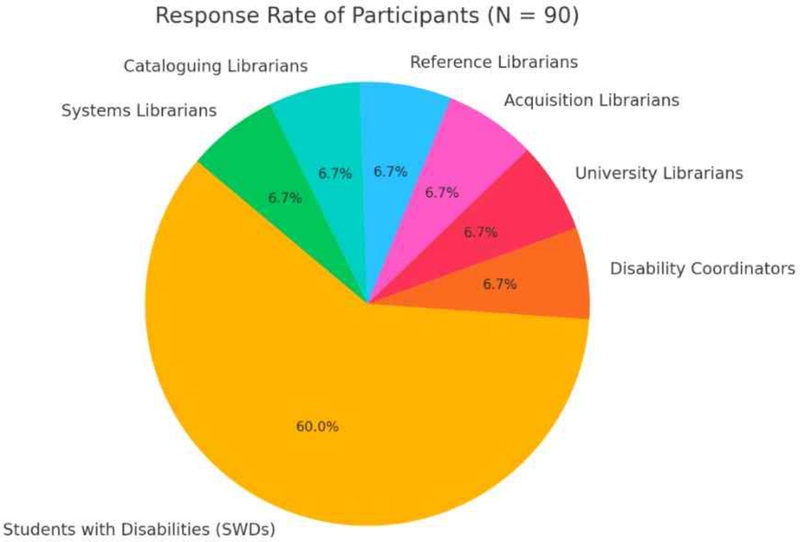
Response rate of participantsSource: Author (2025)
To assess gender inclusivity within support services and professional roles, the study collected gender data from participants across six public university libraries: Kenyatta, Egerton, Maseno, TUM, SEKU, and Garissa. Participants were drawn from three core groups: SWDs, disability coordinators, and library staff. Each university contributed nine SWDs, one disability coordinator, and five librarians representing various functional roles, resulting in a total sample of 90 participants. Capturing gender distribution was integral to understanding patterns of representation across user and professional categories within the libraries.
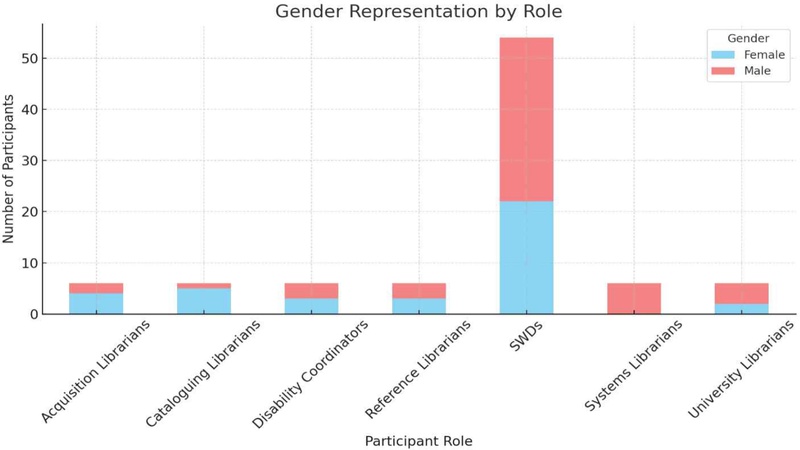
Gender Representation of Participants by RoleSource: Author (2025)
2.3 Research Approach
This study adopted a qualitative research approach to explore the experiences and perspectives of SWDs in accessing digital resources in public university libraries. This approach prioritized contextual depth over numerical analysis, using interviews and observations to uncover nuanced insights. It emphasized credibility, transferability, dependability, and confirmability to ensure trustworthiness. By focusing on human-centered inquiry, the method allowed for a rich, interpretive understanding of complex social phenomena related to digital inclusion (Kumari et al., 2023; Dubey & Kothari, 2022; Yin, 2018).
2.4 Target Population
The study targeted six public universities: Maseno University, SEKU, Garissa University, and TUM, all known to enroll SWDs. Each institution was treated as a distinct case to explore both shared and unique experiences.
2.5 Sampling Technique and Sample Size
This study employed purposive sampling, specifically expert and maximum variation sampling, to select participants and six diverse public university libraries from across Kenya. The sampling process was carried out in two stages. First, six universities were chosen to represent diversity in geographical location, institutional size, and levels of resource endowment, ensuring coverage of both urban and remote contexts. Second, within each institution, participants were identified based on their involvement in or experience with digital inclusion initiatives. These included SWDs as end-users of digital services, disability coordinators as institutional advocates, and library staff from acquisitions, cataloguing, reference, and systems as implementers of library services. Purposive sampling was justified because the study sought in-depth insights rather than statistical generalization. The combination of expert selection and maximum variation ensured that the survey captured a wide range of experiences, contexts, and institutional practices, thereby enhancing the richness and validity of the findings.
The sample size was guided by the principle of theoretical saturation, where data collection continued until no new themes or insights were emerging. In total, 90 participants were included in the study, drawn from six public universities. Each university contributed nine SWDs, one disability coordinator, and five librarians, ensuring balanced representation across stakeholder groups. The sample was structured to capture maximum variation in terms of disability types, institutional age and size, gender distribution, and levels of digital literacy. This balance ensured that the study prioritized depth of understanding over numerical representativeness, allowing the findings to reflect the complexity and diversity of digital inclusion practices across Kenyan public university libraries.
2.6 Research Instruments and Methods of Data Collection
The study employed a combination of qualitative data collection techniques to ensure a comprehensive and credible exploration of digital inclusion practices. These included a literature review to identify thematic gaps and inform the theoretical framework, as well as a document analysis to contextualize institutional efforts through the examination of policies and official records. Semi-structured interviews were conducted with SWDs, librarians, and disability coordinators to gather in-depth perspectives on digital access and support structure. Focus group discussions with SWDs provided collective insights into shared challenges and experiences. Structured observations in university libraries offered direct evidence of how digital inclusion initiatives were implemented and experienced in practice. Together, these methods enabled triangulation, strengthened the validity of findings, and provided a nuanced understanding of the factors influencing digital inclusion in public university libraries.
2.7 Piloting
A pilot study was carried out at the University of Nairobi to test and refine the research instruments for clarity, validity, and reliability. The choice of the University of Nairobi was deliberate, as it is the oldest and largest public university in Kenya, with a diverse student population, including SWDs, and a well-established library system. These characteristics made it a suitable environment for piloting, since it provided a representative setting to anticipate potential challenges that could emerge in other universities. Feedback from participants helped adjust interview schedules to improve question relevance and consistency. This process also assessed feasibility and addressed potential logistical issues, thereby strengthening the overall quality and effectiveness of data collection (Dubey & Kothari, 2022).
2.8 Data Analysis Techniques
The study used thematic and content analysis to interpret qualitative data, a methodological choice that ensured both depth and breadth in understanding digital inclusion practices. Thematic analysis was particularly appropriate as it allowed the researcher to identify, analyze, and interpret recurring patterns and meanings across interviews, focus groups, and observations, providing nuanced insights into participants’ lived experiences. Content analysis complemented this by offering a more thorough examination of institutional documents and policies, enabling comparison between what was formally stated and what was practiced in libraries.
The process of data analysis in this study followed an approach using NVivo 14 to ensure rigor, replicability, and ethical integrity. All interview transcripts and documentary evidence were first imported into NVivo, where the software provided an organized environment for managing large volumes of qualitative data. This step allowed the researcher to store, access, and cross-reference participant narratives alongside institutional documents efficiently, laying the foundation for a structured analysis. Once the data were imported, nodes were created to represent key concepts derived both from the research objectives and emergent issues in the transcripts. These nodes acted as containers where specific segments of data were coded systematically. Through this process, participant statements were categorized under relevant themes such as policy enforcement, staff competence, interdepartmental collaboration, and monitoring mechanisms. Coding was carried out in a line-by-line manner to capture the full depth of meaning in the responses while maintaining consistency across sources. To protect participant confidentiality, pseudonyms were assigned to each participant based on their role and university affiliation.
2.9 Research Reliability and Validity
The study ensured reliability through consistent research procedures, meaning that data collection instruments, interview protocols, and observation checklists were applied uniformly across all six universities and participant groups. This standardization reduced variation that might arise from researcher bias or inconsistent administration, thereby ensuring that findings were comparable across different contexts. For instance, using the same semi-structured interview guide with SWDs, librarians, and disability coordinators provided a common frame of inquiry, while still allowing for flexibility in probing individual experiences.
Consistency was further supported by strategies such as peer debriefing, member checking, and audit trails, which enhanced dependability. Validity was strengthened by maintaining objectivity during data collection, as well as through prolonged engagement and persistent observation, which deepened contextual understanding and improved the accuracy of interpretations (Hendren et al., 2023).
2.10 Limitations
The study focuses on measuring patterns and establishing causal relationships statistically among public university libraries in Kenya, which limits the generalizability of the findings to other university library contexts, such as private universities, community libraries, or technical colleges. Potential biases in self-reporting and observation are acknowledged, as participants may have provided desirable responses or altered behavior due to the researcher’s presence. Although triangulation and transparent documentation of methods were employed to enhance trustworthiness, these limitations remain inherent to qualitative research. The study also faced constraints in scope and access. Only select disability categories, such as visual, hearing, and physical impairments, were included, which may not represent the experiences of students with cognitive, developmental, or psychosocial disabilities. Additionally, access to certain internal policy documents was restricted, limiting a deeper evaluation of institutional policy implementation. Variations in technological infrastructure and resource allocation across the six universities posed challenges in drawing standardized comparisons, while temporal limitations meant that ongoing or newly implemented digital inclusion initiatives after the data collection period were not captured. Finally, the qualitative case-oriented design emphasizes contextual richness but reduces the potential for broad generalizability across all higher education institutions in Kenya or beyond.
2.11 Ethical Considerations
The study prioritized ethical integrity by obtaining approval from the National Commission for Science, Technology, and Innovation (NACOSTI), as well as research clearance from the respective university libraries. All participants received a clear explanation of the study’s objectives, procedures, and their rights. Informed consent was sought in writing, with participants assured that their involvement was voluntary and that they could withdraw at any stage. Confidentiality was maintained through secure storage of data and restricted access to research materials. Anonymity was ensured by removing personal identifiers and reporting findings in aggregated form, so that no individual or institution could be linked to specific responses. Special care was taken with SWDs to ensure accessibility of consent forms and interview materials. By engaging the relevant authorities from the study locales (university administrations, library directors, and disability support offices), the research complied with both national guidelines and institutional ethical standards, thereby safeguarding participants and strengthening the credibility of the findings (Creswell & Creswell, 2017; Hendren et al., 2022).
3. Findings
3.1 Institutional Policies and Enforcement
The study revealed a widespread absence of enforceable institutional policies on digital accessibility in most of the selected universities. While inclusivity was occasionally mentioned in overarching policy documents, such as ICT strategies, these references lacked operational clarity, measurable standards, or designated responsibilities for implementation. For example, although Kenyatta University referenced “inclusive digital technologies” in its policy documents, no implementation guidelines, timelines, or funding provisions accompanied this commitment. As a result, departments operated independently without clear frameworks, creating inconsistencies in service delivery. Lack of structured guidance was echoed across the institutions, as noted by a cataloguing librarian from South Eastern Kenya University:
“There is no clear policy on how to make digital resources accessible to students with disabilities. We do not have any formal guidelines on this” (CL5, interview, March 2025).
Similarly, a systems librarian from Kenyatta University observed:
“Inclusivity is mentioned in our ICT policy, but there is nothing specific on digital libraries or how we are supposed to implement accessibility features” (SL1, interview, March 2025).
3.2 Staff Competence and Training
Staff competence in digital accessibility emerged as a critical gap in the implementation of inclusive library services. Most staff, including university librarians, systems librarians, and cataloguers, lacked familiarity with accessibility guidelines such as the WCAG and had limited or no training on assistive technologies like JAWS and NVDA. Only Kenyatta University had instituted regular workshops specifically for SWDs and select staff members, which helped bridge the knowledge and skills gap. As one reference librarian from Kenyatta noted:
“We organize workshops every semester specifically for SWDs on how to use screen readers and adaptive technologies” (RL1, interview, March 2025).
In contrast, at other institutions such as Maseno and Egerton, training was sporadic and often not tailored to accessibility needs. Staff expressed uncertainty in assisting SWDs due to the absence of structured training. A librarian from Maseno University admitted:
“We rarely get feedback from SWDs on what works or does not. There is no formal way for them to voice these issues” (RL3, interview, March 2025).
3.3 Collaboration Between Departments
Effective collaboration among departments was found to be a significant determinant of successful digital inclusion. However, only Kenyatta University demonstrated structured collaboration involving the library, ICT department, and the disability office, particularly during the rollout of digital platforms. This collaboration ensured that digital systems were vetted for accessibility before deployment. As one systems librarian noted:
“Before we launch any e-platform, we involve the ICT team and disability coordinator to check for accessibility” (SL2, interview, March 2025).
In other universities, collaboration was ad hoc and often reactive, triggered only after SWDs raised complaints. In places like Garissa and South Eastern Kenya University, observational data confirmed the absence of formal coordination mechanisms. This fragmented approach was further emphasized by a disability coordinator from Egerton who noted:
“We are consulted for physical access issues, but rarely for digital platforms or library systems” (DC2, interview, March 2025).
The study also revealed that SWDs were rarely included in co-design or review processes for digital tools, limiting the responsiveness of services to user needs. One SWD from Egerton University remarked:
“The framework should not be something created in an office. Students with disabilities must be involved in developing it” (SWD2, interview, March 2025).

Status of Interdepartmental Collaboration on Digital Inclusion Across Selected Universities
3.4 Monitoring and Evaluation
The absence of monitoring and evaluation (M&E) frameworks significantly hindered the sustainability and effectiveness of digital inclusion efforts. None of the six universities had mechanisms in place to regularly assess the functionality or impact of installed assistive technologies or accessible platforms. As reported in interviews, assistive tools like JAWS and NVDA, when available, were not periodically audited, and there were no formal feedback loops to capture user satisfaction. A systems librarian candidly observed:
“We install assistive software, yes, but we do not assess whether it is working as intended or if students are using it. There is no monitoring process” (SL2, interview, March 2025).
From the students’ perspective, even when feedback was sought, it seldom translated into visible change:
“They ask for feedback sometimes, but I do not think anything changes. We never hear back” (SWD27, interview, March 2025).
Another acquisition librarian from Kenyatta University emphasized the lack of follow-up:
“Monitoring is not part of our routine. Once tools are in place, that is the end of it—no follow-up, no review” (AL1, interview, March 2025).
3.5 Financial Support
Financial limitations were identified as a foundational barrier to the effective implementation of digital accessibility strategies. Most universities lacked specific budget allocations for the procurement, maintenance, or upgrade of assistive technologies and accessible formats. Funding for training programs and system updates was also scarce. While policy documents from institutions like Kenyatta University referenced international frameworks such as the UNCRPD and WCAG, these commitments were not backed by financial or operational support. For instance, some departments undertook isolated efforts to produce materials in Braille or audio formats, but these were unsystematic and lacked institutional coordination. As noted by a reference librarian at Maseno University:
“These formats are not consistent. Some departments provide them, others do not. There is no unified strategy” (RL3, interview, March 2025).
Observations revealed that the absence of dedicated funding often forced students to rely on peers for material conversion, thereby delaying access and undermining their academic autonomy.
3.6 User Empowerment
User empowerment through awareness creation, participation in system design, and access to feedback channels was notably lacking across most institutions. SWDs were rarely involved in decision-making processes related to the development or evaluation of digital resources. Focus group discussions and interviews revealed that students lacked the necessary knowledge and channels to advocate for their accessibility needs. A SWD from Egerton University emphasized the importance of co-creation:
“Students with disabilities must be involved in developing it” (SWD2, interview, March 2025).
In many cases, support services for SWDs were passive rather than proactive, with students expected to navigate systems without orientation or dedicated assistance. Moreover, the absence of digital feedback tools or regular consultation further limited students’ ability to influence change. As one reference librarian from Maseno University pointed out:
“We rarely get feedback from SWDs on what works or does not. There is no formal way for them to voice these issues” (RL3, interview, March 2025).
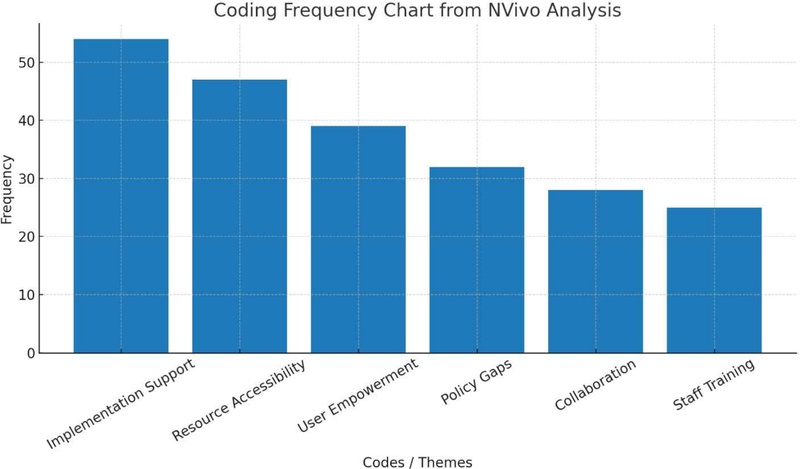
Frequency Chart Showing how many times participants mentioned Implementation Support, Resource Accessibility, and User EmpowermentSource: Author (2025)
4. Discussion
4.1 Institutional Policies and Enforcement
The findings highlight a significant gap in institutional policies and enforcement mechanisms regarding digital accessibility in Kenyan public university libraries. Despite scattered references to inclusivity, there is a striking lack of operationalized frameworks or compliance benchmarks, with most universities lacking formal guidelines for digital accessibility. This aligns with Abuya and Githinji (2022), who found that many Kenyan universities still lack enforceable institutional policies addressing digital inclusion for SWDs. The absence of policy enforcement reflects a disconnect between national commitments, such as Kenya’s ratification of the UNCRPD, and institutional practices. The situation is further exacerbated by the limited translation of policy aspirations into actionable procedures, a concern echoed by Dabi and Golga (2024) in their study of Ethiopian universities. Institutions must develop clear, enforceable, and resourced policies aligned with global accessibility standards, such as WCAG, and ensure these are integrated into ICT, library, and academic planning frameworks. Without this, digital inclusion efforts will remain fragmented and ineffective.
4.2 Staff Competence and Training
The study revealed a critical deficit in staff competence regarding digital accessibility, with most librarians unfamiliar with key assistive technologies or international accessibility standards. This finding aligns with the research by Amponsah and Bekele (2023), who emphasized the importance of targeted training in building digital inclusion capacity for both library personnel and students. Only Kenyatta University had structured training sessions for SWDs and staff, suggesting that institutional commitment directly influences capacity-building efforts. The lack of training in other institutions indicates a systemic oversight that compromises service delivery and undermines the academic experiences of SWDs. As noted by Luvale (2022), building digital inclusion requires investment not only in technologies but in human capital. Embedding accessibility training in staff development programs, with modules tailored to different library roles, is crucial for transforming inclusive policy into practice. Institutions must also institutionalize refresher training to address technology evolution and support consistent user engagement.
4.3 Collaboration Between Departments
Effective interdepartmental collaboration is a foundational element of successful digital inclusion strategies; however, findings reveal that such collaboration is often minimal and informal in most institutions. Except for Kenyatta University, other universities lack structured mechanisms that integrate the roles of the library, ICT offices, and disability units in planning and evaluating digital resources. This mirrors Dabi and Golga’s (2024) observation that institutional silos hinder the mainstreaming of digital inclusion in higher education. The reactive nature of collaboration, only occurring after student complaints, demonstrates a lack of proactive planning. The findings highlight the need for integrated governance structures or digital inclusion task forces, as recommended by Fenta et al. (2023), which can coordinate across departments, ensure compliance, and embed feedback from SWDs. Such collaboration should also involve SWDs as co-creators of services, rather than merely recipients, thereby reinforcing Assanbayev and Makoelle’s (2024) advocacy for participatory inclusion.
4.4 Monitoring and Evaluation
The absence of monitoring and evaluation (M&E) frameworks for digital accessibility is a central institutional weakness identified in the study. While assistive technologies were installed in some universities, there were no systems to assess their effectiveness, usage, or user satisfaction. This finding aligns with the literature by Beyene et al. (2023), which stresses the importance of M&E systems in tracking the impact and sustainability of digital inclusion efforts. The lack of designated officers or feedback mechanisms further weakens accountability and continuous improvement. This points to a significant implementation gap, where interventions exist symbolically but lack follow-up, as noted by Wang and Si (2024) in their study on digital literacy in China. Universities should adopt continuous monitoring and evaluation (M&E) practices, such as digital feedback loops, accessibility audits, and annual reporting, to enhance responsiveness and effectiveness. Embedding M&E in policy and assigning accountability to specific units is crucial for institutionalizing digital inclusion as a long-term goal.
4.5 Financial Support
The findings clearly show that digital inclusion for SWDs remains underfunded in most universities. There are no dedicated budget lines for the acquisition of assistive technologies, training, or content format adaptation, except for isolated efforts in Kenyatta University. This finding is consistent with those of Zaid et al. (2024), who emphasize that financial limitations are a recurring obstacle to the delivery of accessible education services in low- and middle-income countries. The study further supports Smadi’s (2022) argument that the lack of targeted investment undermines digital equality despite policy commitments. In most universities, SWDs rely on informal support networks to access content in accessible formats, compromising their independence. Institutions must prioritize inclusive budgeting by earmarking funds specifically for digital accessibility. Furthermore, external funding opportunities, such as grants or public-private partnerships, can supplement institutional allocations. Sustainable digital inclusion cannot be achieved without financial commitment that matches policy intentions.
4.6 User Empowerment
The empowerment of SWDs through active participation, awareness creation, and feedback mechanisms was found to be largely absent across most institutions. While Kenyatta University made modest strides in involving SWDs in platform design, other universities lacked participatory mechanisms or orientation programs. This aligns with Salahuddin (2022), who noted that user-centered design is often neglected in accessibility planning. The marginalization of SWDs in the development of services they rely on contradicts the principles of inclusive education and the Marrakesh Treaty, as emphasized by Were et al. (2022). Without systematic empowerment strategies, institutions risk perpetuating dependency rather than fostering autonomy. Feedback systems such as regular consultations, digital suggestion portals, and SWD representation in library planning must be institutionalized. Additionally, universities should conduct awareness campaigns to inform SWDs of their rights and available services, as recommended by Kiambati et al. (2024). Empowered users are not only beneficiaries but essential contributors to sustainable inclusion.
5. Proposed Framework for Digital Inclusion in Public University Libraries
Based on the empirical findings and discussions from the six selected public universities in Kenya, a three-pillar framework is proposed to enhance digital inclusion for SWDs in public university library systems. This framework integrates institutional, infrastructural, and user-focused components, addressing the systemic gaps identified in policy, practice, and resource allocation.
5.1 Pillar 1: Institutional Support Structures
This foundational pillar ensures that digital inclusion is embedded within institutional governance, strategic planning, and budgeting processes.
Key Components:
- ∙ Enforceable digital accessibility policies: Formal adoption and implementation of policies aligned with WCAG, UNCRPD, and local regulatory frameworks.
- ∙ Dedicated budget lines: Clear financial allocation for assistive technologies, staff training, and content adaptation.
- ∙ Inclusive strategic plans: Integration of digital accessibility goals in university and library strategic documents.
- ∙ Interdepartmental collaboration protocols: Formalized collaboration among ICT units, disability offices, and library staff to support inclusive digital resource planning.
5.2 Pillar 2: Accessible Digital Infrastructure
This pillar emphasizes the technological and infrastructural foundations required to ensure accessible digital environments.
Key Components:
- ∙ Procurement of assistive technologies: Acquisition of tools such as screen readers, Braille displays, magnification software, and speech-to-text systems.
- ∙ Compatible digital platforms: Adherence to accessibility standards such as WCAG in library management systems, websites, and e-resource portals.
- ∙ Continuous monitoring and evaluation tools: Implementation of accessibility audits, user satisfaction surveys, and designated accessibility officers to evaluate performance and ensure compliance.
5.3 Pillar 3: User Empowerment Mechanisms
This pillar focuses on equipping students with the knowledge, skills, and tools necessary to engage with digital services fully.
Key Components:
- ∙ Structured awareness campaigns: Orientation and information drives targeting both SWDs and staff on available digital services and user rights.
- ∙ Targeted and regular training programs: Hands-on training for SWDs and library staff on how to use assistive technologies and navigate digital platforms.
- ∙ Feedback systems and adaptation loops: Mechanisms for SWDs to provide feedback and for institutions to adapt services in response, including digital suggestion portals and routine consultations.
6. Conclusion
This study examined the state of digital inclusion for SWDs across six public university libraries in Kenya. The findings revealed critical gaps in institutional policy enforcement, staff competence, interdepartmental collaboration, and the accessibility of digital infrastructures. While some universities, such as Kenyatta University, demonstrated progress, most lacked formal guidelines, adequate training programs, and consistent monitoring mechanisms. The absence of structured feedback systems and limited financial investment further compounded the exclusion of SWDs from fully benefiting from digital library services. Notably, the study emphasized the need for an integrated approach centered on policy, infrastructure, and empowerment to promote equitable access to healthcare. The proposed three-pillar framework, comprising Institutional Support Structures, Accessible Digital Infrastructure, and User Empowerment Mechanisms, offers a strategic pathway to achieving inclusive digital environments in academic libraries.
7. Recommendations
7.1 Recommendations for Policy
Formulate Enforceable Accessibility Policies. Public universities should develop comprehensive and enforceable digital accessibility policies aligned with international standards such as the WCAG and the UNCRPD. These policies must go beyond aspirational statements and include specific provisions on digital library accessibility, with clearly defined benchmarks, timelines, and responsible units.
Integrate Accessibility into Strategic Plan. Institutional strategic plans, particularly those related to ICT and library services, should mainstream digital inclusion for SWDs. Accessibility must be embedded into broader digital transformation agendas to ensure alignment with national education and disability inclusion frameworks.
Mandate Continuous Monitoring and Evaluation (M&E). Policies should require systematic monitoring of digital accessibility initiatives. Universities should institutionalize M&E tools, such as accessibility audits, usage data analytics, and user satisfaction surveys, to assess the effectiveness of assistive technologies and accessible platforms.
Establish Dedicated Budget Lines for Digital Inclusion. Universities should allocate distinct and protected budget lines for the acquisition, maintenance, and training related to assistive technologies. This financial commitment is essential for sustaining long-term accessibility efforts and reducing dependency on donor-driven interventions.
Strengthen Interdepartmental Collaboration Protocols. Policy frameworks should mandate coordinated collaboration between library services, ICT units, disability mainstreaming offices, and academic departments. These protocols should include joint planning, implementation, and feedback structures to ensure a holistic response to the needs of SWDs.
7.2 Practical Implications of the Study
Framework for Institutional Action. The proposed Three-Pillar Framework (Institutional Support Structures, Accessible Digital Infrastructure, and User Empowerment Mechanisms) offers a practical model for universities seeking to improve digital inclusion for SWDs. Institutions can adapt and adopt this framework to guide their policy formulation, service delivery, and strategic planning processes.
Guidance for Staff Training and Role Definition. The study underscores the need for tailored capacity-building programs. University librarians, acquisition and cataloguing staff, systems personnel, and disability coordinators should receive role-specific training on digital accessibility tools and inclusive service provision.
Support for Inclusive Technology Deployment. Findings revealed inconsistent and underutilized assistive technologies. Universities should prioritize the structured deployment of tools like JAWS, NVDA, and screen magnifiers, ensuring proper installation, maintenance, signage, and user instructions are readily available.
Empowerment of Students with Disabilities. Libraries must institutionalize regular training programs for SWDs on the use of digital and assistive technologies. Additionally, feedback mechanisms such as digital suggestion portals and inclusive user forums should be established to allow SWDs to voice challenges and co-design solutions.
Institutional Learning and Policy Adaptation. By documenting the implementation gaps and lived experiences of both users and staff, this study provides a data-driven foundation for iterative learning. Universities should utilize these insights to review and adapt their inclusion strategies periodically.
Acknowledgments
The authors wish to sincerely acknowledge the invaluable contributions of the journal editors, peer reviewers, and editorial team for their constructive feedback throughout the publication process. Special thanks are extended to the Technical University of Kenya for institutional support during the conduct of this research.
Author Contributions
Stephen Maina conceived the study, collected and analyzed data, and drafted the manuscript. Proscovia Svard provided conceptual and methodological guidance and contributed to revisions. Naomi Mwai offered theoretical insights, validated findings, and reviewed the manuscript. Stephen Maina served as the corresponding author and coordinated the submission.
Ethics Approval
This study adhered to the ethical standards for academic research as outlined by the Technical University of Kenya. Formal ethical review was deemed unnecessary, as the research complied with institutional guidelines for studies involving minimal risk and non-invasive data collection methods, such as interviews and document analysis.
Funding
This research was self-funded by the principal investigator. No external funding was received from public, private, or non-profit organizations.
References
-
Abu Qaadan, A., Hamad, F., & Fakhouri, H. (2024). Facilitating digital accessibility for students with disabilities in information services at Jordanian academic libraries. Library Management.
[https://doi.org/10.1108/LM-01-2024-0001]

- Abuya, E. O., & Githinji, J. W. (2022). Inclusion of visually impaired and deaf students in universities in Kenya: A call for action. Washington International Law Journal, 32(1), 1-21.
- Addai-Wireko, A., Nukpe, P., & Frimpong, A. D. (2020). Adaptive technology for supporting persons with disability in selected public academic libraries in Ghana. Library Philosophy and Practice, 1-17.
-
Agbabiaka, H. I., Olatunji, S. A., Saleh, M., Sodangi, A. B., & Muhammad, H. (2024). Students with disabilities (SWDs) and facilities accessibility in a northern Nigerian public university: Dismantling exclusion in achieving SDG4. Facilities.
[https://doi.org/10.1108/F-04-2023-0039]
-
Akbar, A., Jabbar, A., Saleem, Q. U. A., & Ashiq, M. (2024). Access and use of digital information resources by students with vision impairment: Challenges, prospects, and the expected role of libraries. International Journal of Disability, Development and Education, 71(2), 189-207.
[https://doi.org/10.1080/1034912X.2022.2095356]
- Alaban, A. (2024). Accessibility tools for students with disabilities in university libraries. Library Progress International, 44(1s), 17-32.
- Alabi, A. O., & Okiki, O. C. (2023). Assistive technologies (AT) preferences of people living with visual disability as information access tools in academic libraries. International Journal of Knowledge Content Development and Technology, 13(2), 25-41.
-
Alu, A. A., & King, L. (2024). Disability policies to guide the provision of facilities, services, and resources to students with disabilities: The case of ten Ghanaian academic libraries. The Journal of Academic Librarianship, 50(6), 102970.
[https://doi.org/10.1016/j.acalib.2024.102970]
-
Amponsah, S., & Bekele, T. A. (2023). Exploring strategies for including visually impaired students in online learning. Education and Information Technologies, 28(8), 9355-9377.
[https://doi.org/10.1007/s10639-022-11145-x]
-
Arbale, H., & Mutisya, D. N. (2024). Book review: Research methods for business students by Mark N. K. Saunders, Philip Lewis, and Adrian Thornhill (Pearson Education, 2019). African Quarterly Social Science Review, 1(2), 8-21.
[https://doi.org/10.51867/AQSSR.1.2.2]
- Armour, C. D. (2023). Reimagining inclusion in higher education: Learning from the experiences of US students with dis/abilities before and during the COVID-19 pandemic (Doctoral dissertation). University of Iowa.
-
Arora, R. (2023). Access of students with disabilities (SWDs) to higher education in India with special reference to Panjab University, Chandigarh, India. Indian Journal of Public Administration, 69(2), 360-371.
[https://doi.org/10.1177/00195561231154387]
-
Assanbayev, A., & Makoelle, T. M. (2024). Practices promoting the inclusion of adult students with disabilities in the classroom: A case of a technical vocational education and training college in Kazakhstan. Education Sciences, 14(5), 529.
[https://doi.org/10.3390/educsci14050529]
-
Ayeni, O. O., Unachukwu, C. C., Osawaru, B., Chisom, O. N., & Adewus, O. E. (2024). Innovations in STEM education for students with disabilities: A critical examination. International Journal of Science and Research Archive, 11(1), 1797-1809.
[https://doi.org/10.30574/ijsra.2024.11.1.0285]
-
Ayoung, D. A., Baada, F. N. A., & Baayel, P. (2021). Access to library services and facilities by persons with disability: Insights from academic libraries in Ghana. Journal of Librarianship and Information Science, 53(1), 167-180.
[https://doi.org/10.1177/0961000620917723]
- Babarinde, B. F., & Onifade, F. (2020). Provision of library resources and services to visually impaired students at Oyo State School for the Blind, Ogbomoso, Nigeria. Library Philosophy and Practice, 1-18.
-
Beyene, W. M., Mekonnen, A. T., & Giannoumis, G. A. (2023). Inclusion, access, and accessibility of educational resources in higher education institutions: Exploring the Ethiopian context. International Journal of Inclusive Education, 27(1), 18-34.
[https://doi.org/10.1080/13603116.2020.1817580]
-
Bilyalova, A., Bazarova, L., Salimova, D., & Patenko, G. (2021). The digital educational environment: The problem of its accessibility for visually impaired students. International Journal of Emerging Technologies in Learning, 16(16), 221-229.
[https://doi.org/10.3991/ijet.v16i16.23453]
- Butalanyi, R. K., Kafu, P. A., & Limo, A. (2020). Institutional readiness for access to higher education by students with disabilities in public universities in Kenya. Library Philosophy and Practice, 1-15.
- Calaycay, C. (2024). Addressing individual needs: Supporting learners with learning disabilities. Nexus International Journal of Science and Education, 1(2), 55-67.
-
Cherotich, C., Cheptoo, K. P., & Obare, R. M. (2024). Challenges in accessing digital resources among visually impaired students at the University of Nairobi Library. Information Development.
[https://doi.org/10.1177/02666669241259083]
- Commission for University Education (CUE). (2014). University standards and guidelines. Nairobi: CUE.
- Creswell, J. W., & Creswell, J. D. (2017). Research design: Qualitative, quantitative, and mixed methods approaches (5th ed.). Sage.
-
Dabi, G. K., & Golga, D. N. (2024). Availability, awareness, and utilization of assistive technologies among students with visual impairment: The case of Haramaya University, Ethiopia. British Journal of Visual Impairment, 42(1), 177-192.
[https://doi.org/10.1177/02646196221124420]
-
Ditlhale, T. W., & Johnson, L. R. (2022). Assistive technologies as an ODeL strategy for promoting support for students with disabilities. Technology and Disability, 34(3), 153-163.
[https://doi.org/10.3233/TAD-220376]
-
Dubey, U. K. B., & Kothari, D. P. (2022). Research methodology: Techniques and trends. CRC Press.
[https://doi.org/10.1201/9781315167138]
-
Duplaga, M. (2017). Digital divide among people with disabilities: Analysis of data from a nationwide study for determinants of internet use and activities performed online. PLOS ONE, 12(6), e0179825.
[https://doi.org/10.1371/journal.pone.0179825]
-
Emong, P., & Zeyen, A. (2023). Exploring equality and non-discrimination of disabled students in policy and practice in public universities in Uganda. In Research handbook on disability policy (pp. 421-436). Edward Elgar Publishing.
[https://doi.org/10.4337/9781800373655.00044]
-
Fenta, H. B., Lake, T. T., & Yemata, B. A. (2023). Regulatory framework of e-learning integration with inclusive higher education in Ethiopia: The case of students with disabilities. International Journal of Inclusive Education, 27(12), 1297-1315.
[https://doi.org/10.14507/MCF-eLi.I12]
-
Ferrara, L. (2024). Library staff’s understanding of attitudinal barriers experienced by individuals with disabilities in libraries. Reference Services Review, 52(1), 50-65.
[https://doi.org/10.1108/RSR-03-2023-0033]
-
Ferri, D. (2024). The Marrakesh Treaty to facilitate access to published works for persons who are blind, visually impaired, or otherwise print disabled in the European Union: Reflecting on its implementation and gauging its impact from a disability perspective. IIC—International Review of Intellectual Property and Competition Law, 55(1), 89-109.
[https://doi.org/10.1007/s40319-023-01410-y]
- Government of Kenya (GoK). (2021). Status report on disability inclusion in Kenya, 2021: Implementing the Global Disability Summit commitments 2018. Nairobi: Government of Kenya.
-
Hamad, F. (2023). Digital inclusion of students with disabilities in digital information services at academic libraries: The University of Jordan case. The Library Quarterly, 93(3), 313-332.
[https://doi.org/10.1086/725067]
-
Hamad, F., Al-Fadel, M., & Shehata, A. M. K. (2024). The level of digital competencies for the provision of smart information services at academic libraries in Jordan. Global Knowledge, Memory and Communication, 73(4/5), 614-633.
[https://doi.org/10.1108/GKMC-06-2022-0131]
-
Hendren, K., Newcomer, K., Pandey, S. K., Smith, M., & Sumner, N. (2023). How can qualitative research methods be leveraged to strengthen mixed methods research in public policy and public administration? Public Administration Review, 83(3), 468-485.
[https://doi.org/10.1111/puar.13528]
-
Johnson, M. W., & Abumeeiz, S. (2023). The limits of inclusion in open access: Accessible access, universal design, and open educational resources. Journal of Librarianship and Scholarly Communication, 11(1), 1-19.
[https://doi.org/10.31274/jlsc.14399]
- Kaaniru, J. (2023). AI assistive technologies (ATs) for persons with disabilities (PWDs) in Africa. Strathmore University, Centre for Intellectual Property and Technology Law (CIPIT).
- Karanja, D. N., Musyoka-Kamere, I., & Wawire, V. (2021). Inclusive education policy and its influence on the academic participation of students with disabilities in selected public universities in Kenya. International Journal of Multicultural and Multireligious Understanding, 8(11), 623-637.
- Karunarathna, I., Gunasena, P., Hapuarachchi, T., & Gunathilake, S. (2024). The crucial role of data collection in research: Techniques, challenges, and best practices. Uva Clinical Research, 1, 1-24.
- Khakali, R. B. (2021). Institutional readiness for access to higher education by students with disabilities in public universities in Kenya (Doctoral dissertation). University of Eldoret.
-
Kiambati, F. G., Juma, S. W., & Wawire, B. A. (2024). Accessibility of digital systems in information retrieval by users with visual impairment. Quality Assurance in Education, 32(2), 197-214.
[https://doi.org/10.1108/QAE-11-2023-0190]
- Kiruki, B. W., & Mutula, S. M. (2021). Accessibility and usability of library websites to students with visual and physical disabilities in public universities in Kenya. International Journal of Knowledge Content Development and Technology, 11(2), 55-75.
- Kiruki, B. W., & Mutula, S. M. (2023). Information and communication technology (ICT) use for information access by visually and physically impaired persons in public university libraries in Kenya. International Journal of Knowledge Content Development and Technology, 13(1), 1-20.
-
Kisanga, S. E., & Kisanga, D. H. (2022). The role of assistive technology devices in fostering the participation and learning of students with visual impairment in higher education institutions in Tanzania. Disability and Rehabilitation: Assistive Technology, 17(7), 791-800.
[https://doi.org/10.1080/17483107.2020.1817989]
- Kulekpo, B. K. (2021). Library access and use for users with special needs at the University of Education, Winneba (Doctoral dissertation). University of Ghana.
- Kumari, S. K. V., Lavanya, K., Vidhya, V., Premila, G. A. D. J. S., & Lawrence, B. (2023). Research methodology (Vol. 1). Darshan Publishers.
-
Kwao, L., Yang, Y., Zou, J., & Ma, J. (2025). A survey of approaches to early rumor detection on microblogging platforms: Computational and socio-psychological insights. Wiley Interdisciplinary Reviews: Data Mining and Knowledge Discovery, 15(1), e70001.
[https://doi.org/10.1002/widm.70001]
- Law, S. K. (2023). Barriers experienced by individuals with IDD when interacting with digital technology and online content. Journal of Intellectual Disabilities, 27(3), 321-339.
- Luvale, B. N. (2022). Institutional policies for persons living with disabilities in accessing information resources at Dedan Kimathi University of Technology Library (Doctoral dissertation).
-
Luvale, B. N. (2025). Digital literacy skills for students with visual and hearing impairments in Kenyan public universities. Library Hi Tech News, 42(3), 25-31.
[https://doi.org/10.1108/LHTN-10-2024-0190]
- Mane, V. S. (2024). Development of tribal people through digital awareness: Exploring the intersection of libraries, technology, and gender equality in the digital age. Journal of Digital and Social Inclusion, 5(2), 45-63.
-
Menzli, L. J., Smirani, L. K., Boulahia, J. A., & Hadjouni, M. (2022). Investigation of open educational resources adoption in higher education using Rogers’ diffusion of innovation theory. Heliyon, 8(7), e09876.
[https://doi.org/10.1016/j.heliyon.2022.e09885]
-
Meydan, C. H., & Akkaş, H. (2024). The role of triangulation in qualitative research: Converging perspectives. In Principles of conducting qualitative research in multicultural settings (pp. 98-129). IGI Global.
[https://doi.org/10.4018/979-8-3693-3306-8.ch006]
-
Morris, F. (2024). Universal design and assistive digital technologies: Enhancing inclusion of persons with disabilities. In The Palgrave handbook of everyday digital life (pp. 283-305). Springer.
[https://doi.org/10.1007/978-3-031-30438-5_16]
-
Mosha, N. F. (2025). The role of artificial intelligence tools in enhancing accessibility and usability of electronic resources in academic libraries. Library Management.
[https://doi.org/10.1108/LM-08-2024-0088]
- Musa, S. B. (2022). Factors affecting students with special needs’ use of digital resources in libraries: The case of students at the Federal College of Education (Technical), Bichi. Career Point International Journal of Research, 3(1), 10-21.
-
Mutia, F., & Cahyani, I. R. (2021). Assistive technology to enhance access to information for students with disabilities: A case study in Surabaya. Khizanah al-Hikmah: Jurnal Ilmu Perpustakaan, Informasi, dan Kearsipan, 9(1), 16-27.
[https://doi.org/10.24252/v9i1a3]
- Mwantimwa, K. (2021). Exploring the usage of assistive technology resources by students with disabilities. Journal of Disability Studies, 7(1), 38-47.
- Nazim, M., & Husain, S. (2023). Digital inclusivity: Role of academic libraries in providing information access to users with disabilities. Library Hi Tech News, 40(6), 16-20.
- Nzivo, C. N., & Wanjiru, M. (2023). Exploring accessibility and inclusivity of academic library services in Kenya: A case study of Machakos University. Library Management, 44(8/9), 699-714.
- Othman, A. K., & Al Mutawaa, N. (2023). Towards inclusive academic libraries: The role of assistive technologies in serving users with disabilities in Kuwait. Global Knowledge, Memory and Communication, 72(6/7), 545-561.
- Patton, M. Q. (2015). Qualitative research & evaluation methods: Integrating theory and practice (4th ed.). Sage Publications.
- Roberts, K., & Ferrall, C. (2022). Building inclusive digital library services: Perspectives from library staff in Canada. Library Management, 43(4/5), 321-336.
- Salahuddin, M. (2022). Accessibility of e-resources in university libraries for students with disabilities: A study in Bangladesh. International Journal of Library and Information Studies, 12(2), 45-58.
- Smadi, H. (2022). Digital library services and accessibility for students with disabilities: A Jordanian case study. Library Philosophy and Practice, 2022, 1-20.
- The National Council for Persons with Disability (NCPWD). (2024). Disability landscape analysis: A comprehensive landscape analysis of disability at the county and national levels in Kenya for informed policy and full societal inclusion. Nairobi: NCPWD.
- Tugli, A. K., & Makhubele, J. C. (2022). Accessibility of library services to students with disabilities in South African universities. African Journal of Disability, 11(1), 1-9.
- Vincent, J. (2024). Making the library accessible for all: A practical guide for librarians (No. 81). Rowman & Littlefield.
- Wang, X., & Si, L. (2024). Digital literacy and inclusion in Chinese libraries: Policies and practices for users with disabilities. The Journal of Academic Librarianship, 50(2), 102-119.
- Were, E., Rono, J., & Koech, P. (2022). Information provision to the visually impaired in academic libraries: A Kenyan perspective on the Marrakesh Treaty. Library Management, 43(8/9), 621-635.
- Zaid, Y. A., AlHamad, A. Q., & Alqaryouti, I. A. (2024). Digital accessibility in higher education: A systematic review of inclusive practices in academic libraries. Education and Information Technologies, 29(3), 2541-2563.
Stephen Maina is the University Librarian at Kirinyaga University, Kenya, and the corresponding author of this article. His professional focus is on digital inclusion, equitable access to electronic resources, and the integration of innovative technologies in library services. In addition, he has a strong interest in information literacy, on which he has published and conducted training to build digital competencies among students and academic staff. His broader research interests include policy development in higher education, digital accessibility, and the role of academic libraries in supporting the Sustainable Development Goals.
Proscovia Svard is an Associate Professor and Head of the Master’s Program in Records Management and Archival Studies, Department of History, Sorbonne University Abu Dhabi. She has extensive experience in records and archives management, information governance, and digital preservation, and has published widely on these themes. Her research also examines the intersection of information management with democratic governance, truth and reconciliation processes, and human rights documentation. She is the author of Enterprise Content Management, Records Management, and Information Culture Amidst E-Government Development.
Naomi Mwai is an Associate Professor in the Department of Information Science, Languages and Communication Studies at the Technical University of Kenya. Her research and teaching interests lie in information science, knowledge management, digital resources, and indigenous knowledge systems. She has published on topics such as information literacy, ICT integration in education, and the transformation of academic library services in the digital era. Dr. Mwai has also contributed to projects examining doctoral students’ research support services in Kenyan universities and continues to champion inclusive, technology-driven approaches to library and information services.