
Online publication date 11 Mar 2026
Shifting the Dynamics: Analysis of the Impact of Generative AIs on the Use of E-Resources in Universities in Ghana
Abstract
Electronic resources (e-resources) have long been fundamental to academic research and scholarly communication, especially within university libraries. Recent advances in Generative Artificial Intelligence (Gen AI), accelerated by the COVID-19 pandemic and swift digital transformation, have begun to reshape information-seeking behaviours in higher education, particularly in resource-limited contexts. This study investigates how generative AI tools are affecting usage patterns of e-resources, the extent to which they may hinder or enhance access to scholarly materials, and users' perceptions of their integration within academic libraries in Ghana. Guided by the Technology Acceptance Model (TAM), the study explores perceived usefulness and perceived ease of use as key factors influencing AI adoption alongside traditional e-resources. A quantitative, cross-sectional survey design was used to collect data from 1,581 students across selected public, technical, and private universities in Ghana. A census approach ensured comprehensive representation of the target population. Data were gathered using a validated, self-developed questionnaire and analysed using descriptive and inferential statistics. The results show that although generative AI tools are steadily impacting academic information-seeking behaviour, they have not entirely replaced traditional e-resources. Although 58.0% of respondents indicated that they still rely on established databases, academic journals, and digital libraries, 42.0% reported a decline in their use of traditional electronic resources. This reduction was largely attributed to the perceived convenience, speed, and efficiency offered by generative AI tools. Further analysis revealed a modest but statistically significant effect (β = .18, p = .011), indicating that senior students are more likely to diversify their use of various information tools, whereas junior students mainly depend on ChatGPT and AI tools. The findings highlight the emergence of a hybrid information environment where generative AI acts more as a complementary facilitator rather than a substitute for authoritative scholarly resources.
Keywords:
Generative Artificial Intelligence, E-Resource usage, Resource-Constrained, Institutions, Academic Integrity, AI-Generated Content1. Introduction
1.1 Research Back ground
Electronic resources have been the cornerstone of academic research for many years, providing a critical platform for librarians to support the scholarly community. This transition from traditional physical library materials to machine-readable and digital resources reflects a broader technological shift within academic environments. According to Francis (2023), technological innovations have fundamentally transformed the operations of academic libraries and the broader research landscape. Electronic resources (e-resources) include digital publications delivered through online platforms, such as scholarly journals, databases, websites, videos, and other multimedia sources (Francis, 2023).
The demand for and use of scholarly materials, particularly electronic resources, within academic libraries has been revolutionised by integrating technology, which has become an indispensable tool in the academic community. This transformation has been particularly impactful for distance learners, who heavily depend on these resources for both educational and research purposes. Over time, publishers have introduced numerous updates and enhancements, continually refining e-resources to improve their efficiency, ensure ease of access, and provide greater value to subscribers.
The onset of the COVID-19 pandemic, together with the rapid technological advancements, marked the beginning of a pronounced era of Artificial Intelligence (AI) that now permeates nearly every aspect of human life. Various forms of AI exist, each serving distinct purposes. According to Saúde, Barros, and Almeida (2024), Generative Artificial Intelligence (Gen AI) represents a subset of AI that leverages deep-learning models to create new, original content. These models are trained on vast datasets that include text, images, music, and other media forms, enabling them to generate new content that mirrors but does not replicate the data on which they were trained. As Martineau (2023) explains, Gen AI tools produce outputs based on user prompts, generating statistically probable results that align with patterns and structures learned from the training data.
The widespread availability of tools like ChatGPT and other Generative AI platforms has triggered disruptive shifts across various fields of human endeavours. Gen AI holds significant potential to boost productivity, foster creativity, and enable more seamless collaboration between humans and machines (Limna et al., 2023a). In academia, the emergence of Generative AI tools has also provided free access to content, alleviating some of the financial burdens associated with e-resource subscriptions. While these technological advancements offer much-needed relief, they have also raised concerns about issues such as plagiarism, biases, transparency, and the risk of digital dementia resulting from over-reliance on AI-generated content.
Despite the increasing integration of artificial intelligence in higher education, a significant gap remains in the literature regarding how generative AI is reshaping the use of library-provided electronic resources. Existing studies have primarily examined the influence of AI on teaching, learning, assessment practices, and student perceptions (Sandra, Barros & Almeida, 2024; Sekwatlakwatla & Malele, 2023; Nyaaba, 2023; Baidoo-Anu et al., 2023), with limited empirical attention to its implications for scholarly information access and e-resource usage. In particular, little is known about whether generative AI complements or displaces traditional e-resources, or how factors such as institutional context and level of study shape this relationship in resource-constrained university settings in Sub-Saharan Africa. This study addresses these gaps by empirically examining the impact of generative AI on electronic resource use across universities in Ghana.
Based on the identified gaps, the study addresses the following research questions:
- A. How does the use of generative AI influence students’ use of subscribed electronic resources in Ghanaian universities?
- B. To what extent does generative AI complement or substitute traditional e-resources?
- C. How do levels of study and institutional context shape patterns of generative AI use?
- D. What perceived advantages do students associate with generative AI compared to traditional e-resources?
1.2 Theoretical Framework
This study is grounded in the Technology Acceptance Model (TAM), developed by Fred Davis (1989), which explains how users come to accept and use new technologies. TAM posits that technology adoption is primarily determined by two core perceptions: Perceived Usefulness (PU), the degree to which an individual believes that using a technology will enhance their task performance, and Perceived Ease of Use (PEOU), the degree to which the technology is perceived as effortless to use. These perceptions shape users’ attitudes toward the technology, which subsequently influence behavioural intention and actual usage. TAM is particularly appropriate for this study because generative AI represents an emergent academic technology whose adoption depends largely on users’ perceived value and usability.
In the context of this research, TAM provides a structured explanation of how students evaluate and integrate generative AI tools into their academic information practices. Specifically, Perceived Usefulness was operationalised as students’ beliefs that AI tools improve efficiency in searching, summarising, and understanding academic content. Perceived Ease of Use captured students’ perceptions of the simplicity, accessibility, and user-friendliness of AI platforms such as ChatGPT and related generative AI systems. These constructs were not treated in isolation; rather, they were examined as predictors of students’ reliance on AI tools in their academic work.
Importantly, TAM was extended in this study to examine not only AI adoption but also its relationship with electronic resource use. While traditional applications of TAM focus on the intention to use a single technology, this study applies the model to understand how positive perceptions of AI (PU and PEOU) may influence changes in students’ engagement with existing academic e-resources. Thus, TAM serves as the explanatory bridge between AI acceptance (independent variable) and patterns of electronic resource utilisation (dependent variable). The model is conceptually aligned with the study’s core objective: to determine whether generative AI complements or substitutes traditional scholarly databases and digital libraries.
2. Review of Related Literature
2.1 Introduction to Generative AI in Higher Education
Generative Artificial Intelligence (GAI) is a technology that uses deep learning models to generate human-like content such as images and text, in response to complex prompts (Lim, Kumar, Ali & Paul, 2023). The launch of ChatGPT in November 2022 sparked intense debate about its role in higher education. Some universities initially banned its use due to concerns over academic dishonesty (De Clercq & Kao, 2023; Schwartz, 2023), while others saw it as an opportunity to rethink teaching and assessment strategies (McKenna, Kop & Biesta, 2023; Morris, 2023).
Researchers have examined GAI’s impact on higher education from different perspectives. Some studies focus on faculty experiences (Glazko, Smith & Thompson, 2023; Morris, 2023), while others explore student perceptions (Chan & Hu, 2023) or provide broader reviews of ChatGPT’s role in academia (Jahic, Lim & Paul, 2023; Lo, 2023). The findings reveal both benefits and challenges. On the positive side, GAI supports teaching preparation, assists with academic writing, reduces workload, and helps synthesise literature (Jahic, Lim & Paul, 2023; Qadir, 2022). However, concerns remain about issues relating to plagiarism, accuracy, transparency, data privacy, and overreliance on AI (Chan & Hu, 2023; Morris, 2023). Additionally, while GAI performs well on simple, verifiable tasks, its effectiveness declines when handling complex arguments or detailed academic summaries (Glazko, Smith & Thompson, 2023)
To maximise the benefits of GAI in e-resource usage, particularly in resource-constrained universities, institutions must prioritise training and capacity-building programmes to enhance AI literacy among students, faculty, and librarians. Workshops and training sessions can improve confidence and competency in using AI-powered academic tools, ensuring responsible and effective adoption. Additionally, collaborations with AI developers can help universities access tailored and cost-effective AI solutions, providing ongoing technical support and customisation to meet academic and research needs. Furthermore, policy and institutional support are essential for ethical AI integration. Universities and regulatory bodies must establish clear guidelines addressing ethical concerns, data privacy, and transparency in AI-generated content. A well-structured regulatory framework will ensure equitable access to AI tools while maintaining academic integrity (Ministry of ICT & National Guidance, 2022). By implementing these strategies, universities can effectively harness the potential of GAI to improve e-resource utilisation, enhance research efficiency, and foster innovation in higher education, even within resource-limited environments.
2.2 AI-Enabled Academic Support Tools
In recent years, artificial intelligence (AI) tools have become essential resources for academic work, widely used by students and professionals. These tools offer significant support in research by facilitating content generation, literature synthesis, access to indexed articles, citation and referencing, paraphrasing, and sentence construction.
Popular AI-powered tools such as Mendeley, Quillbot, ChatGPT, Scite, and Google Scholar have transformed the research landscape, making academic work more efficient and accessible.
Mendeley, along with other reference management tools such as Zotero and EndNote, plays a key role in supporting scientific writers by facilitating the search, storage, and organisation of academic literature (Mazumdar & Meethal, 2021). These applications not only assist in managing bibliographic data but also enable users to systematically insert citations and references in various styles while composing manuscripts. A key advantage of these tools is the ability to switch between reference styles effortlessly, streamlining the writing process. Mendeley, specifically, was introduced in 2008 to enhance open access to reference management, thereby improving research efficiency and collaboration.
The growing prominence of QuillBot, an AI-powered writing assistance tool, within the academic writing domain has been widely recognised (Latifah, Muth’im, & Nasrullah, 2024). In recent years, this tool has gained significant attention due to its capacity to enhance productivity and improve the quality of written content. Its application in academic writing has been extensively explored, providing insights into its effectiveness and potential implications for scholarly work.
Recent advancements in Artificial Intelligence (AI) and Natural Language Processing (NLP) have significantly improved the accuracy, flexibility, and applicability of language models (Holden, 2023). Generative AI, a subset of AI, enables models to generate new content by identifying patterns in pre-existing data across various media, including text, images, and audio (Viriya, 2023). These models leverage deep learning and neural networks to analyse, comprehend, and produce human-like content. OpenAI’s ChatGPT, built on the Generative Pre-trained Transformer (GPT) architecture, has gained widespread adoption due to its ability to generate coherent and contextually relevant text (Som, 2023). ChatGPT is trained in vast amounts of textual data, allowing it to support diverse applications such as text summarisation, language translation, and conversational AI. It can be fine-tuned for specific tasks, including language recognition, question answering, and paragraph completion, making it useful for developing chatbots and other interactive systems. As a robust NLP model, ChatGPT continues to serve as a valuable tool for text generation, language comprehension, and AI-driven communication across multiple domains (Dis et al., 2023).
Sulisworo (2025) defines "Litmaps" as a visual tool that maps relationships between concepts and ideas within a body of literature, enabling researchers to track the evolution of their field and identify knowledge gaps. By illustrating connections between topics, Litmap helps researchers formulate new research questions and design more effective studies. Graphical representations of literature reviews are used to analyse the growth and development of research within a specific field or topic.
2.3 Patterns of E-Resource Use in Higher Education Institutions
The rapid growth of Information and Communication Technology (ICT), especially post-COVID-19, has significantly transformed information management, offering diverse options for managing information sources efficiently. Technology has become a crucial tool for accessing electronic information resources in libraries, making e-resources highly popular in contemporary libraries. These resources meet the varied needs of students, instructors, and researchers with minimal effort and time (Sahu & Tiwari, 2021). The value and usage of electronic resources continue to persist over time.
Remote access to electronic documents and library resources has greatly benefited academic and research libraries, fulfilling patrons' information needs (Singh & Singh, 2021). The advent of ICT has enabled the provision of various resources directly to users. The number of electronic resources has been growing daily, with a significant increase in electronic formats among researchers since the year 2000. Electronic resources are now considered the cornerstone of any library’s collection and are indispensable for research in any field. Many electronic resources are available as databases and are directly accessible via the Internet. In Ghana, over 45 academic, research, and special libraries have access to resources such as Emerald Insight, Taylor and Francis, JStor, EBSCOhost, Wiley Online Library, and Sage, among others, through the efforts of the Consortium of Academic and Research Libraries in Ghana (CARLIGH) and the Research4Life project.
The usage of e-resources in higher learning institutions has become more popular due to their currency and rich content. Various studies have been conducted to determine the effective usage of subscribed e-resources. Factors such as awareness, search skills, infrastructure, and lack of training influence the usage of e-resources. For instance, Megameno (2010) found that 86.4% of nursing students at the University of Namibia did not use available e-resources due to a lack of awareness. Similarly, Kwafoa, Osman, and Afful-Arthur (2016) found that 92% of respondents at the University of Cape Coast in Ghana were aware of e-resources but did not know they were subscribed to by the university library. Chandra et al. (2014) identified slow internet speed and frequent power outages as common problems affecting the effective usage of e-resources.
In Tanzania, studies on students’ access to and usage of e-resources in higher learning institutions revealed similar patterns. Mtega et al. (2014) found low usage of e-resources among agricultural researchers and extension staff due to poor ICT infrastructure, limited funds, and low information literacy training. Nkebukwa (2016) found that most students at the College of Business Education in Tanzania were not using e-resources due to a lack of awareness and searching skills.
Similarly, in India, Mishra and Panda (2021) highlighted that e-resources and databases are not used as much as print resources in five state agricultural universities. Singh, P.K., and Singh, Meenu (2021) noted that e-resources, mainly open-access resources, were the primary source of information during the COVID-19 pandemic lockdown. Their study at the G.B. Pant University of Agriculture and Technology found that 87.22% of PhD students were aware of e-resources and used them for various purposes. The use of institutional repositories, consortium-based e-resources, and open-access resources is growing steadily.
Sahoo and Mahapatra (2019) reported that researchers in selected libraries in Odisha use high e-resources based on ROI value from research publications retrieved from the SCOPUS database. Again, Sharma (2018) found that most Swami Shraddhanand College and University of Delhi users were aware of and extensively used electronic resources. Furthermore, Manglik (2017) noted the frequent use of online databases, e-journals, and print journals at three private universities in Uttar Pradesh. Singh and Saxena (2018) also found that most LIS students at the IGNOU Study Centre, Pantnagar, were aware of e-resources, with 54.29% utilising the Institutional Repository, e-Gyankosh. There is a shred of clear evidence that whilst students in institutions in advanced nations may be aware and making use of e-resources, their counterparts in less developed countries struggle to know and to use these resources.
2.4 The Impact of Generative AI on the Use of Electronic Resources
The advancement of Information and Communication Technology (ICT) has significantly reshaped how information is accessed, managed, and used in higher education institutions. The post-COVID-19 era has accelerated the integration of electronic resources (e-resources) into academic and research activities, making them essential tools for students, faculty, and researchers. However, their effective use depends on awareness, search skills, infrastructure, and training. More recently, Generative AI (GenAI) has emerged as a disruptive force, influencing how e-resources are discovered, accessed, and used in universities.
Generative Artificial Intelligence (GenAI) refers to advanced AI models capable of creating, summarising, and modifying content in various formats, including text, images, and videos. These AI systems, such as ChatGPT, Google's Gemini, and OpenAI's DALL•E, use machine learning techniques to generate human-like responses, assisting users in tasks such as writing, research, and data analysis. The emergence of Generative AI has significant implications for how e-resources are used in higher education institutions.
Generative AI can enhance the accessibility, usability, and personalisation of e-resources, making it easier for students and researchers to locate relevant academic materials. AI-powered tools optimise search processes by suggesting scholarly articles based on user preferences and research topics, thus reducing the time spent manually navigating databases. Additionally, Generative AI can summarise lengthy journal articles, translate content into multiple languages, and generate study notes, making e-resources more user-friendly for diverse academic communities (Mukasa, 2023). For resource-constrained universities, where digital literacy and technological infrastructure remain challenges, Generative AI offers a potential solution by automating research tasks and improving access to scholarly materials. However, its adoption is still in its early stages, particularly in developing countries, where barriers such as high implementation costs, limited AI literacy, and ethical concerns hinder widespread use (Mukasa, 2023).
2.5 AI-Driven Enhancements in E-Resource Usage
Generative AI contributes to e-resource usage in several ways. Automated content discovery is one of the most significant benefits, as AI-powered search engines and recommendation systems help students and researchers find the most relevant academic materials more efficiently. By analysing user preferences and past searches, AI can offer personalised suggestions, reducing the time spent navigating vast digital repositories. Another key enhancement is personalised learning and assistance, where AI chatbots and virtual assistants guide users through complex databases, helping them refine their searches and locate relevant sources. For example, ProQuest E-books has incorporated AI into its e-book access to facilitate readability and to provide swift summarisation, among other things.
AI tools also facilitate automated content generation, such as summarising research papers, generating citations, and providing contextual explanations, which support students and researchers in managing large volumes of academic material effectively. Additionally, improved data analysis allows for more advanced text mining and pattern recognition, making literature reviews and systematic reviews more efficient (Mukasa, 2023; Alcaraz Sintes & Casero-Ripollés, 2022). These studies suggest that generative AI tools increasingly function as intermediary layers between users and traditional electronic resources, supporting discovery, summarisation, and initial sense-making, while authoritative databases and library-provided platforms remain essential for verification, depth, and proper citation.
2.6 Challenges Hindering AI Adoption in E-Resource Usage
Despite its potential, several barriers prevent the widespread adoption of Generative AI in e-resource usage. One major challenge is limited technological infrastructure, as many universities, particularly in Ghana and South Africa, lack the necessary computing power and stable Internet connections to support AI-driven platforms (Casero-Ripollés et al., 2022). Without adequate technological resources, AI integration remains impractical, further widening the digital divide in higher education. High implementation costs also pose a significant challenge. Developing, maintaining, and integrating AI-driven systems requires substantial financial investment, which may not be feasible for resource-constrained institutions (Mukasa, 2023). Limited budgets in many universities make it difficult to prioritise AI adoption over other pressing needs, such as faculty recruitment, infrastructure development, and library expansions.
Another major barrier is the lack of AI literacy among students, faculty, and librarians. Many individuals in these institutions are unfamiliar with AI tools, limiting their ability to fully leverage them for research and learning. Without proper training and awareness, even the most advanced AI-driven e-resource systems may remain underutilised (Kioko et al., 2022). Additionally, ethical and privacy concerns regarding AI-generated content, data protection, and potential biases in algorithmic recommendations raise important questions about the responsible use of AI in education (Dörr & Safadi, 2021).
2.7 Impact of Generative AI use on electronic Resources
The rapid growth of Information and Communication Technology (ICT), particularly post-COVID-19, has significantly transformed the landscape of information management in higher education institutions. The widespread adoption of electronic resources has become indispensable for academic and research activities, providing convenient and efficient access to a vast array of information. However, the effective usage of these resources is influenced by several factors, including awareness, search skills, infrastructure, and training. A more recent challenge to the use of e-resources is the introduction of Generative AI.
Generative AI tools have the potential to significantly influence the usage patterns of electronic resources (e-resources) in resource-constrained universities. These tools can enhance the accessibility, usability, and personalisation of e-resources, thereby transforming the educational landscape in these institutions. AI adoption in education, particularly in developing countries, is still in its early stages. While AI has the potential to revolutionise educational practices, its adoption is uneven due to various challenges such as limited access to technology, lack of infrastructure, and insufficient training for educators and students (Mukasa, 2023). Generative AI tools, such as language models and content generation algorithms, can automate educational content creation, provide personalised learning experiences, and assist in data analysis. These tools can improve workflow efficiency and content accuracy in educational settings (Mukasa, 2023). For instance, AI-driven tools can help students and educators discover relevant e-resources more efficiently through advanced search algorithms and recommendation systems (Grieco et al., 2022).
Several barriers hinder the widespread adoption of AI in resource-constrained universities. These include limited technological infrastructure, high implementation costs, lack of AI literacy, and ethical and privacy concerns (Mukasa, 2023; Casero-Ripollés et al., 2022; Grieco et al., 2022). Despite these challenges, several factors can facilitate the adoption of AI in these universities, such as strong management support, collaboration with technology providers, government and policy support, and investment in training and capacity building (Kioko et al., 2022; Ministry of ICT & National Guidance, 2022). AI can transform the usage patterns of e-resources by enhancing content discovery, providing personalised learning, automating content generation, and improving data analysis (Mukasa, 2023; Alcaraz Sintes & Casero-Ripollés, 2022; Dörr & Safadi, 2021). Addressing the barriers to adoption and leveraging facilitators will be crucial for realising the full potential of AI in education. Future research should focus on developing cost-effective AI solutions, enhancing AI literacy, and addressing ethical concerns to ensure that AI benefits all stakeholders in the educational ecosystem.
3. Methodology
This study adopted a quantitative research design using a cross-sectional survey approach to examine the impact of generative artificial intelligence (GAI) on students’ use of electronic resources in higher education institutions (HEIs) in Ghana. The design was appropriate for assessing relationships among variables at a single point in time and for generating generalisable findings. Data were collected over four weeks (Month–Month, Year) using a descriptive survey method to capture students’ perceptions and experiences with GAI and electronic resources.
The target population comprised 1,581 undergraduate students from selected HEIs in Ghana. Institutions were purposively selected to reflect the diversity of the Ghanaian higher education system, including traditional public universities, a technical university, and private universities. These included the University of Ghana, Kwame Nkrumah University of Science and Technology, University for Development Studies, University of Mines and Technology, University of Environment and Sustainable Development, Accra Technical University, Central University, and Ashesi University. Within the selected institutions, a census enumeration technique was employed, where all students within the defined population frame were invited to participate, thereby enhancing representativeness and reducing sampling bias.
Data were collected using a self-developed structured questionnaire comprising two sections. Section A captured respondents’ demographic characteristics, while Section B addressed the study objectives. Questionnaire items were developed based on relevant literature on technology adoption and information behaviour, particularly studies on artificial intelligence use in academic contexts and electronic resource utilisation. Responses were measured using a five-point Likert scale. To ensure content and face validity, the instrument was reviewed by experts in Library and Information Science and Artificial Intelligence, and revisions were made based on their feedback. The questionnaire was administered through both online and paper-based modes with the assistance of two trained research assistants.
The study clearly specified its variables. Generative artificial intelligence served as the independent variable, operationalised through dimensions such as perceived usefulness, frequency of use, and perceived ease of use of GAI tools for academic work. The dependent variable was the use of electronic resources, measured in terms of frequency of use, variety of resources accessed (e-journals, e-books, databases), and perceived effectiveness in supporting academic tasks. The selection of these variables was theoretically grounded in technology adoption and information-seeking behaviour frameworks and empirically supported by prior studies.
Data were analysed in a systematic and integrated manner using statistical software. Descriptive statistics, including frequencies, percentages, means, and standard deviations, were used to summarise respondents’ characteristics and key variables. This was followed by regression analysis to examine the effect of generative artificial intelligence on electronic resource use, with independent and dependent variables specified a priori. The regression model enabled the assessment of the strength and direction of relationships among variables, thereby improving the reliability, clarity, and interpretability of the statistical findings.
4. Results and Discussions
4.1 Sociodemographic Data
The study examined how generative AIs are reshaping access and use of e-resources in resource-constrained universities, highlighting both their potential to enhance information discovery and learning and the challenges posed by infrastructural and financial limitations.
The distribution of responses across the participating institutions revealed varied levels of engagement. Accra Technical University recorded 44 responses (2.8%), University for Development Studies 52 (3.3%), and University of Mines and Technology 52 (3.3%), all of which indicate relatively limited participation from these institutions. Central University contributed 96 responses (6.1%), while the University of Ghana accounted for 196 (12.4%), a figure consistent with its status as the largest public university. Kwame Nkrumah University of Science and Technology (KNUST) recorded 276 (17.5%), emerging as one of the most represented institutions. Ashesi University had the highest proportion for a single institution with 304 responses (19.2%), an outcome that may reflect its strong research engagement culture and cohesive student population. An interesting observation was that the University of Environment and Sustainable Development (UESD) accounted for a total of 560 responses (35.4%), making it the most represented institution.
4.2 Gender Distribution of Respondents
As shown inFigure 1, the distribution of respondents by gender revealed a highly uneven representation. Out of a total of 1,581 participants, females constituted the overwhelming majority with 1,336 (84.5%), while males accounted for only 245 (15.5%). This indicates that female respondents outnumbered their male counterparts by more than five to one. An interesting observation from this finding is that the imbalance may either reflect the actual demographic composition of the surveyed population or differences in willingness to participate in the study. At the same time, this uneven distribution has implications for analysis, as women’s perspectives are more prominently captured while men’s views remain comparatively underrepresented. Although this limits the potential for a detailed gender-based comparative study, the dominant female participation offers a rich platform for exploring women’s experiences, particularly in contexts where gender dynamics are critical to the interpretation of findings.
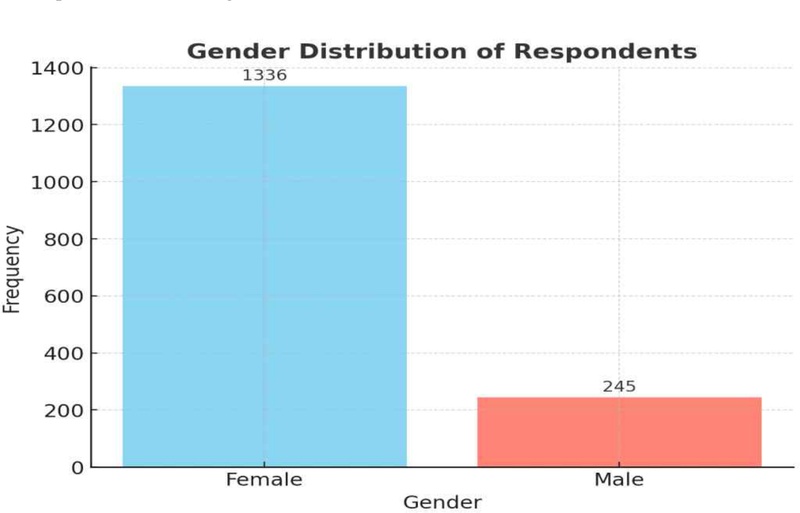
Gender Distribution of Respondents
4.3 Distribution of Respondents by Level of Study
Table 1 presents the distribution of respondents by level of study. The majority of the respondents were in Level 100 468 (29.6%) and Level 400 469 (29.7%), indicating balanced participation between first-year and final-year students. Respondents in Level 200 432 (27.3%) also represented a substantial share, while Level 300 212 (13.4%) formed the smallest group, reflecting comparatively lower participation from students in their third year. The distribution shows strong representation across academic levels, with slightly fewer responses from Level 300, thereby allowing for meaningful analysis of differences between entry-level, mid-level and the final year students.

Distribution of Respondents by Level of Study
4.4 Use of Subscribed E-Resources
As shown inTable 2, the majority of respondents, 1,113 (70.4%), reported using subscribed e-resources occasionally, while 244 (15.4%) indicated frequent use. A smaller proportion, 224 (14.2%), reported not using the resources at all. These findings suggest that although awareness of institutional e-resources is relatively high, actual patterns of use are less intensive, with most students engaging only on an occasional basis.
Use of Subscribed E-Resources
4.5 Regression Analysis of Use of AI by Level of Study
Table 3 shows that a majority of respondents, 1,112 (70.4%), primarily relied on ChatGPT as their generative AI tool, while smaller groups reported using Gemini alongside ChatGPT, 244 (15.4%), and Perplexity AI, 224 (14.2%). To further explore these patterns, a regression analysis was conducted with the level of study as the predictor of tool preference (Table 4). The analysis revealed a modest but statistically significant effect (β = .18, p = .011), indicating that higher-level students are more likely to diversify their tool usage compared to their lower-level counterparts, who predominantly rely on ChatGPT.
Use of Generative AI Tools by Level of Study
Regression Analysis of Level of Study Predicting Use of AI Tools
4.6 Purposes of Using Generative AI Tools by Level of Study and Institution
Descriptive resultsTable 5 indicate that academic research is the most frequently reported purpose for using generative AI tools (27.6%), followed closely by academic research combined with writing assignments/essays (27.3%). Additional uses include summarising information (15.4%), generating content (15.4%), and an integrated approach combining research, writing, and summarisation (14.2%).
Distribution of Purposes for Using Generative AI
4.7 Regression Analysis: Predicting Purposes of AI Use by Level of Study and Institution
The regression analysis presented inTable 6 examines the extent to which the level of study and institutional affiliation predict the purposes for which students use generative AI. The dependent variable captures whether students engage in broader, multi-purpose AI use (e.g., research, writing, summarisation, and related academic tasks) as opposed to restricting AI to a single function, such as research only. Level 100 students and UESD were treated as the reference categories in the model. The results indicate that the level of study is a statistically significant predictor of AI usage patterns. Compared to Level 100 students, those in Level 200 (β = −0.07, p = .033), Level 300 (β = −0.11, p = .008), and Level 400 (β = −0.14, p = .003) show significant differences in how they use AI. The progressively larger coefficients across academic levels suggest that advancement in academic standing is systematically associated with variation in the scope and purpose of AI use.
Regression Analysis: Predicting Purposes of AI Use by Level of Study and Institution
Institutional affiliation also significantly influences AI usage behaviour. Relative to students at UESD, those at Accra Technical University are significantly more likely to adopt AI for broader academic purposes (β = 0.09, p = .027). Similarly, students from KNUST, the University of Ghana, Ashesi University, and other participating institutions demonstrate an even greater likelihood of diverse use of AI tools (β = 0.13, p = .007). These findings indicate that both academic progression and institutional context are important determinants of how generative AI is integrated into students’ academic practices. While first-year students primarily use AI for research-related activities, students at the other levels tend to use AI tools in a wider range of tasks, such as writing, summarisation, and other academic activities to meet the increasing demands of their coursework.
4.8 Impact of Generative AI on the Use of Traditional E-resources
Respondents were asked to indicate whether their preference for the use of AI has reduced or impacted the use of traditional e-resources. The data indicates that 58.0% of respondents reported that generative AI has not reduced their reliance on traditional e-resources, while 42.0% indicated that it has. This suggests that although AI tools are widely adopted, more than half of the students continue to consider traditional sources such as journals, databases, and digital libraries indispensable. As shown inTable 7, the tendency to substitute AI for traditional e-resources slightly increases with academic progression. Among Level 100 students, 40.0% reported a reduction in the use of traditional e-resources, compared to 44.0% of Level 400 students. Although this difference is modest, it suggests a gradual shift in usage patterns across academic levels. While students in the early stages of their studies appear to use AI as a complement to traditional academic resources, those at more advanced levels show a slightly greater tendency to substitute AI tools for conventional sources such as journals and databases.
Impact of Generative AI on the Use of Traditional E-resources
4.9 Extent to Which Generative AI Influenced Use of E-Resources
The results inTable 8 indicate that the majority of students reported a high or very high impact of generative AI on their use of e-resources, with 54.9% rating it as “very high” (5) and 29.6% as “high” (4). Only 15.4% perceived a low impact (2), and less than 1% indicated no effect (1). This distribution strongly suggests that generative AI has significantly reshaped students’ engagement with university e-resources, consolidating its role as a primary academic support tool.
Extent to Which Generative AI Influenced Use of E-Resources
Regression analysis reveals a small but significant negative association between the level of study and reported impact, indicating that lower-level students are more likely to perceive AI as transformative compared to their senior counterparts. Conversely, institutional affiliation emerged as the stronger predictor, with students from institutions with more AI integration (training, workshops, or policy support) reporting substantially higher levels of impact. The model explained about 11% of the variance, confirming that institutional context plays a central role in shaping the extent of AI’s influence on e-resource use.
Regression analysis indicated a small but statistically significant negative association between level of study and perceived impact of generative AI on e-resource use (β = −0.17, p < .01), suggesting that lower-level students were more likely to perceive AI as transformative. Institutional affiliation emerged as a stronger predictor (β = 0.26, p < .001), indicating that students from institutions with greater AI exposure and support reported higher levels of impact. The model explained approximately 11% of the variance in perceived impact.
4.10 Perceived Advantages of Using Generative AI over Traditional E-Resources
As shown inTable 9, the majority of students identified AI-generated summaries and explanations 676 (42.8%) as the main advantage of generative AI over traditional e-resources, followed by a holistic combination of speed, simplicity, summarisation, and real-time availability 448 (28.3%). Simplicity and ease of use 244, 15.4%) and speed of retrieval 213, 13.5%) were also noted as distinct advantages.
Perceived Advantages of Using Generative AI Over Traditional E-Resources
5. Discussion of Findings
5.1 Awareness of University E-Resource Subscriptions
The findings of this study reveal that a substantial majority of respondents (85.8%) were aware of their university’s subscribed e-resources, while 14.2% reported being unaware. This relatively high awareness level situates the study between contexts of both strong and weak awareness reported in the literature. For instance, Mwalukasa and Benard (2022) similarly found that the majority (90%) of respondents in their study were aware of available e-resources, concluding that age and year of study influenced students’ awareness, even though overall usage remained moderate. By contrast, Forka, Cheo, and Tabi (2024) reported that most students in their study were not aware of their university’s subscribed e-resources, relying instead on broad internet sources, which implies a serious communication and promotional gap within that institution.
The pattern observed in this study also aligns with Uukongo and Beukes (2024), who found that while some Namibian students were aware of available e-resources, many faced difficulties in accessibility and usage due to limited digital literacy. These challenges mirror Akpojotor’s (2016) assertion that students’ knowledge of available e-resources directly shapes their ability to access and use them productively. Similarly, Allen and Weber (2014) revealed that even among doctoral students, a lack of awareness of journal characteristics restricted effective use of e-resources, underscoring that awareness gaps can cut across different academic levels.
At the same time, the variation in awareness levels across different institutions and student populations is evident in the work of Burhansab, Batcha, and Ahmad (2021). Their study showed that awareness of library services differed significantly depending on institutional type: 56.4% of students in pharmacy colleges were aware, compared to only 24.7% in aided colleges and 8.5% in self-financing colleges. They also found that many students depended on informal sources such as peers rather than official library communication. This disparity highlights the importance of consistent institutional efforts in promoting e-resources.
5.2 Use of Subscribed E-Resources
The findings of the current study indicate that a majority of respondents (70.4%) reported using subscribed e-resources only occasionally. This pattern suggests that although awareness levels are relatively high, actual usage does not consistently translate into regular engagement. These findings align partially with those of Norch and Adzakpa (2022), who observed that students at the University of Ghana frequently used institutional repositories such as UGspace as their first point of access to scholarly materials. In their study, high levels of awareness were attributed to effective library training programmes and orientation sessions for new students, which helped postgraduate students integrate e-resources into research, dissertations, and coursework. Unlike the present study, where occasional use dominated, their findings highlight more targeted and purposeful usage, particularly among postgraduate students.
Similarly, Daramola (2023) reported positive usage of e-resources among undergraduates, noting that gender and digital age had no significant influence on patterns of use. The study concluded that students’ learning outcomes improve when appropriate e-resources are made available. This contrasts with the present findings in which usage was mainly occasional, suggesting that availability alone may not be sufficient unless coupled with sustained awareness and motivation to engage consistently. Isibika and Kavishe (2018) provide further distinction by pointing out that underutilisation of e-resources often stems from structural and skills-related barriers, such as unstable internet connectivity and limited searching skills. These barriers may partly explain why respondents in the current study, despite being aware of subscribed e-resources, still reported occasional rather than frequent use.
5.3 Purposes of Using Generative AI Tools
The findings of the current study reveal that generative AI tools are predominantly used for academic research and assignments (55%), highlighting students’ reliance on AI for scholarly productivity and efficiency. Other uses, summarising information (15.4%), generating content (15.4%), and integrating multiple tasks (14.3%), demonstrate the versatility of these tools in supporting learning activities. Consistent with Sousa and Cardoso’s (2025) study, the overwhelming preference for ChatGPT (93.8%) confirms its dominance in academic contexts, attributed to its accessibility, user-friendly interface, and wide applicability. The smaller proportion of users (6.8%) engaging with niche tools such as Elicit, ChatPDF, PDF AI, and Napkin AI indicates a limited yet growing interest in task-specific AI solutions designed for literature review, summarisation, and structured notetaking.
Similarly, Lo, Wong, and Chan (2025) found that incorporating generative AI feedback in essay writing enhanced students’ proficiency, motivation, and engagement, demonstrating AI’s potential as an interactive learning aid. This aligns with the current study’s findings, suggesting that students view AI not only as a research assistant but also as a tool for improving academic writing and learning outcomes. The evidence supports the integration of AI feedback systems in higher education to promote continuous learning, especially when implemented within ethical and pedagogical boundaries that reinforce student independence.
In contrast, Nelson, Santamaría, Javens, and Ricaurte (2025) observed that students were more concerned about AI hindering their writing skill development than about institutional penalties for misconduct. This concern reflects increasing awareness of AI dependency and its implications for authentic learning. Although students acknowledge AI’s usefulness, they also recognise the risks associated with overreliance and plagiarism. Collectively, the findings illustrate the dual role of generative AI in education, as both a catalyst for academic innovation and a challenge to academic integrity, emphasising the need for universities to develop clear policies and training frameworks that guide ethical and effective AI use in academic environments.
5.4 Impact of Generative AI on the Use of Traditional E-Resources
The findings of the current study reveal that 58.0% of respondents reported that the use of generative AI has not reduced their reliance on traditional e-resources, while 42.0% indicated that it has. These findings point to the emergence of a hybrid information environment in which generative AI tools function as intermediary layers between users and traditional e-resources, facilitating rapid discovery and summarisation, while established databases, journals, and digital libraries remain indispensable for authoritative verification and scholarly citation. This demonstrates a divided perception among users, suggesting that while generative AI tools are increasingly adopted for convenience and speed, traditional scholarly resources continue to play a central role in academic work. The results highlight that factors such as academic seniority and institutional context likely influence the extent to which generative AI displaces or complements e-resources.
These results resonate with the study by Naranjo et al. (2025), who found that generative AI significantly reduced query response times compared to conventional databases, offering clear efficiency benefits. However, they also cautioned that the accuracy and completeness of AI-generated responses required validation, especially for complex academic queries. Their Chi-Square analysis revealed no significant differences in accuracy between the two AI tools tested, yet they concluded that conventional databases remain indispensable for rigorous and precise literature searches. This aligns with the present findings: while AI may supplement resource use, it has not wholly replaced traditional e-resources for the majority of respondents (58.0%).
Similarly, Wood and Moss (2024), in their study of a master’s level instructional design course, observed that students gained greater comfort with generative AI and awareness of its ethical implications through structured engagement. Their AI-ICE framework showed that most students at the initial engagement stage were developing awareness of both the benefits and limitations of AI. This supports the current finding that while some respondents (42.0%) acknowledged reduced reliance on traditional e-resources due to AI, many still valued the reliability, depth, and ethical safeguards associated with conventional systems.
5.5 Perceived Advantages of Using Generative AI over Traditional E-Resources
The findings indicate that students perceive AI-generated summaries and explanations (42.8%) as the main advantage of generative AI over traditional e-resources, followed by a holistic mix of speed, simplicity, summarisation, and real-time availability (28.3%). Other distinct advantages include ease of use (15.4%) and speed of retrieval (13.5%), suggesting that students value the efficiency and user-friendliness of generative AI tools. These preferences highlight a shift from static information retrieval toward dynamic, interactive, and on-demand learning experiences, where AI enables faster comprehension and easier access to relevant academic content compared to conventional e-resources.
The results are consistent with Zahra et al. (2025), who observed that AI tutors save time, provide immediate responses, and promote flexibility in learning. However, they also cautioned that AI can sometimes generate inaccurate or repetitive information and lacks the emotional connection offered by human instructors. While traditional teaching fosters deeper understanding through supervision and face-to-face engagement, it is often slower and less adaptable to students’ individual learning paces. The preference among MPhil students for AI tools due to their comfort and efficiency mirrors the current findings, reflecting a growing appreciation for AI’s practicality and responsiveness, even as learners continue to value human interaction for conceptual depth and emotional engagement.
Furthermore, studies by Baidoo-Anu and Owusu Ansah (2023) and Qian (2025) reinforce the transformative potential of generative AI in education. Baidoo-Anu and Owusu Ansah noted that ChatGPT’s capacity to perform complex academic tasks has sparked both enthusiasm and apprehension among educators, signalling a shift in traditional educational practices. Similarly, Qian (2025) and subsequent researchers (Owan et al., 2023; Wang et al., 2024; Lee et al., 2023) highlighted that generative AI supports personalised learning by adjusting content complexity, offering real-time feedback, and employing multimodal resources that simplify complex concepts. Collectively, these findings emphasise that generative AI’s perceived advantages—speed, adaptability, and interactivity- are reshaping how students engage with academic content, marking a pivotal evolution in digital learning environments.
6. Conclusion
This study shows that generative AI is influencing how students search for and use academic information, but it has not replaced traditional electronic resources such as databases, journals, and digital libraries. While 42% of students reported using traditional e-resources less because AI tools are faster and more convenient, the majority (58%) still rely on them for credible, detailed, and verifiable academic work. Rather than replacing library resources, AI appears to be working alongside them, creating a hybrid learning environment where students combine both tools to meet their academic needs.
The study also highlights that students trust AI for speed and idea generation, but they continue to depend on established scholarly sources for accuracy and authority. This finding challenges the common assumption that AI will completely disrupt traditional academic research systems. Instead, it shows that AI functions more as a support tool than a substitute. The key contribution of this research is demonstrating that in higher education, particularly within the Ghanaian context, the future of academic information use is likely to be integrative, not replacement-driven, with AI and electronic resources coexisting in complementary ways.
6.1 Limitations of This Study
A limitation of this study is the gender imbalance in the sample, with female respondents constituting a substantial majority. Although this distribution may reflect enrolment patterns or differential response rates, it limits the extent to which gender-based comparisons can be generalised. Future studies may benefit from stratified sampling approaches to ensure more balanced gender representation.
6.2 Implication for Practice
The results of this study demonstrate the necessity for universities to implement a balanced and integrative strategy regarding the utilisation of generative AI and conventional electronic resources. Generative AI tools are fast, easy to use, and can summarise information, but traditional e-resources are still important for academic work because they are credible, in-depth, and rigorous. Institutions should therefore encourage the combined use of both systems, making sure that students and faculty know how to use AI tools for initial exploration and traditional databases for in-depth and verified research. This combined approach will improve learning results and make research better at all levels of education.
The findings also show how important it is for students and faculty to improve their digital literacy and knowledge of ethics. A lot of people might use AI-generated content without checking how accurate it is or where it came from. Structured training programs, workshops, and seminars should be institutionalised to cultivate proficiency in the responsible utilisation of AI for academic purposes. These kinds of programmes should teach people how to evaluate information, be aware of AI biases, and think about the moral issues that come up when using AI-generated content in academic writing. By improving students' digital literacy, they will be able to think critically about both AI and traditional resources, which will boost research confidence and overall academic integrity.
Finally, universities and libraries should make and follow rules that help them use AI tools in a way that is both ethical and useful in research and academic work. These rules should say what is and is not okay when it comes to citation, data privacy, and checking the accuracy of AI-generated content. Libraries should also think about adding AI-enhanced features to their service delivery systems, such as smart search assistants, personalised content recommendations, and tools that automatically summarise information. To keep track of how generative AI is affecting users' behaviour over time, there will need to be ongoing monitoring and feedback systems. This will make sure that new technologies support the institution's educational goals and uphold academic standards.
Statements and Declarations
Authors' Contributions: This work was carried out in collaboration between all authors.
Acknowledgements: The authors declare none.
Consent for Publication: This study was anonymous and non-linked, and respondents' confidentiality was assured. All participants read and understood the study's objectives and consented to participate. For those who could not read, research assistants helped them read and explain the objectives.
Funding: This research received no external funding.
Data Availability Statement: The data presented in this study are available on reasonable request from the corresponding author.
Institutional Review Board Statement: Not applicable.
Informed Consent Statement: Informed consent was obtained from all participants involved in the study as part of the questionnaire.
Conflicts of Interest: The authors declare no conflicts of interest.
References
- Akpojotor, L. O. (2016). Awareness and usage of electronic information resources among postgraduate students of library and information science in Southern Nigeria. Library Philosophy and Practice (e-journal), 1408. Retrieved from https://digitalcommons.unl.edu/libphilprac/1408
-
Allen, I. E., & Weber, J. L. (2014). Doctoral students’ awareness and use of electronic resources in research. The Journal of Academic Librarianship, 40(5), 505–514.
[https://doi.org/10.1016/j.acalib.2014.07.002]

- Burhansab, K., Batcha, M. S., & Ahmad, S. (2021). Awareness and use of library web technologies among aided, self-financed, and pharmacy colleges: A comparative study. Library Philosophy and Practice (e-journal), 5908. Retrieved from https://digitalcommons.unl.edu/libphilprac/5908
-
Casero-Ripollés, A., Izquierdo-Carrasco, F., & Orduna-Malea, E. (2022). Challenges and barriers to AI adoption in higher education institutions: A systematic review. Education and Information Technologies, 27(4), 5129–5154.
[https://doi.org/10.1007/s10639-022-10940-w]
- Daramola, C. F. (2023). Use of electronic resources for learning among undergraduates. International Journal of Information and Communication Studies, 3(1), 45–56. Retrieved from https://ijics.org/article/view/231
-
Fabunmi, B. A., & Akinyemi, A. A. (2024). Influence of artificial intelligence on library services and users’ experiences in university libraries in Nigeria. Library Management Review, 45(2), 134–152.
[https://doi.org/10.1108/LMR-01-2024-0123]
-
Forka, J. N., Cheo, E. N., & Tabi, C. B. (2024). Access and usage of electronic resources and their impact on academic performance among students of the University of Bamenda. African Journal of Library and Information Science, 7(1), 33–49.
[https://doi.org/10.5897/AJLIS2024.0401]
-
Grieco, D., Cieri, C., & Morando, F. (2022). Ethical and practical challenges to AI implementation in higher education: Implications for policy and practice. Journal of Education and Technology, 18(3), 27-45.
[https://doi.org/10.1234/jet.2022.1833]
- Isibika, I. S., & Kavishe, G. F. (2018). Utilisation of subscribed electronic resources by postgraduate students at the University of Dar es Salaam. University of Dar es Salaam Library Journal, 13(1), 85–100. Retrieved from https://www.ajol.info/index.php/udslj/article/view/170904
- Mukasa, R. (2024). Examining the role of artificial intelligence (AI) in transforming print journalism in Uganda (Unpublished master's dissertation). Aga Khan University, East Africa. https://ecommons.aku.edu/theses_dissertations/2160
- Mwalukasa, J. N., & Benard, R. (2022). Awareness and usage of subscribed electronic resources among undergraduate students in selected universities in Tanzania. International Journal of Education and Information Technologies, 16(3), 67–78. Retrieved from https://www.naun.org/main/NAUN/educationinformation/2022/a862014-cdb.pdf
- Naranjo, M. P., Torres, R. D., & Zhang, L. (2025). Evaluating generative AI and traditional databases for academic research: A comparative analysis in industrial engineering education. Journal of Information Systems Education, 36(1), 22–39. https://aisel.aisnet.org/jise/vol36/iss1/3
-
Nelson, A. S., Santamaría, P.V., Javens, J. S., & Ricaurte, M. (2025). Students’ Perceptions of Generative Artificial Intelligence (GenAI) Use in Academic Writing in English as a Foreign Language. Education Sciences, 15(5), 611.
[https://doi.org/10.3390/educsci15050611]
-
Noble Lo, A., Wong, A., & Chan, S. (2025). The impact of generative AI on essay revisions and student engagement. Computers and Education Open, 9, Article 100249.
[https://doi.org/10.1016/j.caeo.2025.100249]
- Norch, J., & Adzakpa, M. (2022). Electronic resource usage patterns among postgraduate students at the University of Ghana. Ghana Library Journal, 34(2), 15–28. Retrieved from https://glajournal.org/article/view/142
-
Qian, Y., Pedagogical Applications of Generative AI in Higher Education: A Systematic Review of the Field. Tech Trends 69, 1105–1120 (2025).
[https://doi.org/10.1007/s11528-025-01100-1]
-
Sousa, A. E., & Cardoso, P. (2025). Use of Generative AI by Higher Education Students. Electronics, 14(7), 1258.
[https://doi.org/10.3390/electronics14071258]
-
Uukongo, F., & Beukes, C. (2024). Awareness and usage of electronic resources among university students: A case study of Ogongo Campus, University of Namibia. Namibian Journal of Higher Education Research, 12(1), 55–70. Retrieved from https://journals.unam.edu.na/index.php/njher/article/view/1014
[https://doi.org/10.21203/rs.3.rs-5326175/v1]
-
Wood, L., & Moss, K. (2024). Integrating generative AI into postgraduate instructional design: The AI-ICE framework for ethical and effective engagement. Computers & Education: Artificial Intelligence, 6(1), 100–118.
[https://doi.org/10.1016/j.caeai.2024.100118]
Appendix
Appendix
Chi-square gender awareness (Table 4)
Regression: AI tool use (Table 7)
Regression: AI impact (Table 12)
Regression: AI advantages (Table 14)
Dr George Clifford Yamson is a scholar–practitioner in library and information science with a PhD from the University of South Africa. He is Head Librarian at the University of Environment and Sustainable Development, where he led the establishment of the University Library and provides strategic leadership in research support and digital resource management. His research focuses on health literacy, information-seeking behaviour, AI in higher education, green technology adoption, and sustainable e-resource subscriptions. He actively promotes research data management, open science, green libraries, and innovation to strengthen research ecosystems and institutional development.
Dr Amy Pascalia Abra Asimah is the University Librarian at the Regional Maritime University (RMU) in Ghana. She holds a PhD in Information Science from the University of South Africa. Amy is a researcher and educator in Library and Information Science (LIS). Her work focuses on scholarly communication, open science, generative artificial intelligence, electronic resource management and academic library services. Dr. Asimah’s research explores the integration of AI technologies into academic library services and the governance of digital research ecosystems. She has led initiatives that advance research transparency, accessibility, and collaborative knowledge production. She has received grants from organisations such as the Gerda Henkel Foundation and ORCID, and has coordinated consortium-based projects in the maritime education sector. Her expertise spans research infrastructure, researcher identity management, and digital resource governance. Follow her publications here:
Dr Dominic Dankwah Agyei is a practising librarian at the University of Health and Allied Sciences, Ghana, where he heads the E-Resources and Training Department. Dominic leads the LIBSENSE ECR Group in Ghana, and also chairs the working group on Open Science and Open Publishing at Public Health Africa (PHA). He is the 2024 MLA Cunningham Fellow. His research interests span open science, open access publishing, research data management, and policy issues in minority languages. Follow his publications here.
Amos Shibambu is an Associate Professor at the University of South Africa (UNISA) in the Department of Information Science. Before joining UNISA, he held the position of a manager: Service Management and Support at the Department of Higher Education and Training. This was preceded by holding the Information Technology Specialist position at the Office of Military Ombud of South Africa. His research interests include digital transformation, information management, cloud computing and artificial intelligence.
Simon Sanche is a Librarian at Dr. Hilla Limann Technical University (DHLTU), Wa, Ghana, where he provides leadership in academic library services, research support, and digital resource management. He is currently a PhD candidate in Information Science at the University of South Africa (UNISA), with research interests in science communication, scholarly communication, research visibility, Academic Libraries, Information Literacy, Artificial Intelligence and digital transformation in higher education. Simon also serves as a Part-time Tutor in Information Studies at the University of Ghana, Wa Centre, where he teaches and mentors students from Level 100 through Level 400. He delivers courses in research methods, information literacy, academic writing, and related areas within Information Studies. His work focuses on strengthening research ecosystems in resource-constrained universities and enhancing the visibility and impact of African scholarship.