
Issues and Challenges in Digitalizing Local Content: An analysis of Three Academic Libraries in Ogun State, Nigeria
Abstract
This study examines the issues and challenges associated with the digitalisation of local content in three academic libraries in Ogun State, Nigeria: Federal University of Agriculture Library (Nimbe Adedipe Library), Olabisi Onabanjo University Library, and Covenant University Library (Centre for Learning Resources). The objectives include assessing the extent of digitalisation, identifying types of local content digitised, understanding librarians’ attitudes towards digitalisation initiatives, exploring reasons for digitalisation, identifying challenges encountered, and proposing strategies to overcome these challenges. A survey research design was adopted, covering a population of 84 personnel, including librarians, library officers, and system analysts. Data were collected using structured questionnaires and phone interviews. The Statistical Package for Social Sciences (SPSS) version 23 was employed for data analysis, with results presented using frequency tables, percentages, and charts. Findings indicate that the extent of digitalisation in the studied academic libraries is moderately high, with faculty expertise directories, theses, and dissertations having the highest digitalisation rates. Librarians’ attitudes toward digitalisation were both positive and negative, with many recognizing its benefits for skill development, research, and institutional visibility, while concerns about copyright abuse, resistance to change, and technological adaptation persisted. The primary motivations for digitalisation included increased accessibility, cost-effectiveness, and cultural heritage preservation. Challenges identified included copyright and ownership issues, data privacy concerns, limited infrastructure, high equipment costs, insufficient funding, and a lack of skilled personnel. The study concluded that while digitalisation efforts are progressing in academic libraries, significant challenges hinder full implementation. The study recommended strategies for overcoming these challenges include adopting emerging technologies, enhancing digital infrastructure, addressing legal and copyright issues, capacity building, increasing awareness and support, and promoting open-access initiatives.
Keywords:
Issues, Challenges, Digitalising, Local Content, Academic Libraries, Ogun State1. Introduction
1.1 Research Background
Local content refers to information and experiences that are produced, owned, and adapted by a community, and which are relevant to its cultural, social, and environmental context. According to Uzuegbu (2012), the provision of local content plays a crucial role in community development. He asserts that communities are more inclined to engage with library services when they are involved in shaping the library’s collections, especially when those collections reflect local realities.
The significance of local content extends beyond community engagement; it supports national development, fosters cultural identity, and enhances global relevance. It also facilitates the realisation of open access by making indigenous knowledge more widely available.
In university settings, local content is predominantly generated through scholarly activities. These include books, theses, dissertations, research reports, journal articles, project papers, inaugural and public lectures, technical reports, field study recordings, workshop proceedings, inventions, and documentation of academic community services.
Recent advancements in digital technologies have made the digitalisation of local content more feasible and efficient. Emerging technologies such as artificial intelligence (AI), machine learning (ML), blockchain, 5G networks, the Internet of Things (IoT), augmented and virtual reality (AR/VR), robotics, 3D printing, biotechnology, cybersecurity, edge computing, cloud computing, nanotechnology, and voice-activated systems have all contributed to this transformation.
Digitalisation, in this context, refers to the conversion of physical materials, such as documents, artefacts, and multimedia, into digital formats. This process ranges from basic digitisation using smartphones to more sophisticated methods involving automation and high-resolution scanning. Digitised materials can then be accessed online, enabling broader public engagement, collaboration, and long-term preservation.
Academic libraries, in particular, must adapt to the global shift towards digital information ecosystems, driven largely by innovations in information and communication technologies (ICTs). As library environments transition from analogue to digital or hybrid models, ICT becomes a vital enabler of digitisation. However, many Nigerian and African universities continue to struggle with limited access to these technologies. Despite such limitations, the increasing preference for digital resources is fuelled by their cost-effectiveness, convenience, eco-friendliness, and accessibility via the internet.
The digital era has transformed information consumption, influencing virtually every sector of society. Ozonuwe, Ayomide, and Ohwofasa (2021) described the 21st century as a “smart generation,” shaped by the rapid rise of the internet, social media, and smart mobile devices. These developments have altered how people live, communicate, and respond to societal issues, resulting in a world where individuals “live online,” constantly interacting with digital content.
Digitising local content offers numerous benefits. It increases global visibility for libraries, provides greater access to information, supports remote learning, and improves the preservation of rare or fragile materials by reducing physical handling. Digital resources also address issues of theft, limited storage space, restricted access due to location or time, and degradation caused by poor environmental conditions. Moreover, digital platforms foster collaboration between libraries and support interoperability, contributing significantly to e-learning and academic exchange.
Nonetheless, the process of digitising local content presents several challenges. These include infrastructural deficits (Zhang & Guo, 2017), digital illiteracy and the digital divide (Van Dijk, 2017), underrepresentation of languages and cultures (Pugliese, 2015), copyright and intellectual property issues (Gendreau, 2015), concerns about data privacy and security (Solove & Schwartz, 2022), limited funding (Gasco, 2018), and problems relating to long-term digital preservation (Besser, 2008). Ethical considerations and fragmented knowledge systems also complicate the process (Levai, 2020; Lyons & Bens, 2018).
Globally, university libraries are embracing digitisation as part of broader movements towards open access, knowledge sharing, and cultural preservation. Local content, including indigenous knowledge, theses, manuscripts, and community-generated publications is vital for academic relevance and cultural continuity. Institutions such as the Library of Congress and Europeana have pioneered the digital preservation and dissemination of such materials (IFLA, 2021). Similarly, the World Digital Library, collaboration between UNESCO and the Library of Congress, promotes access to culturally significant content from around the world (UNESCO, 2022).
Across Africa, digitisation initiatives are growing as universities seek to protect cultural heritage and increase the global visibility of African scholarship. Notable efforts include the Database of African Theses and Dissertations (DATAD), spearheaded by the Association of African Universities (AAU). Yet, African libraries continue to face barriers such as inadequate funding, weak internet infrastructure, insufficient technical expertise, and the absence of strong institutional policies (Ocholla & Shongwe, 2013). Despite these challenges, institutions like the University of Pretoria and Makerere University have established robust institutional repositories hosting a range of academic outputs.
In Nigeria, the drive to digitise local content has intensified, particularly following the disruptions caused by the COVID-19 pandemic. Universities such as the University of Ibadan, Obafemi Awolowo University, and Covenant University have made significant progress in setting up digital repositories for theses, inaugural lectures, and institutional research outputs. However, major obstacles persist. Limited ICT infrastructure, irregular electricity supply, lack of skilled personnel, and erratic funding continue to hinder widespread digitisation. Adomi and Kpangban (2010) observed that although many Nigerian university libraries recognise the importance of digitisation, implementation often remains fragmented and unsustainable. Additionally, copyright restrictions and unclear institutional policies further limit the digitisation of local content.
Nevertheless, there are promising developments. The Nigerian Universities Commission (NUC) now requires universities to establish institutional repositories as part of their accreditation criteria. Open Access Nigeria also advocates for enhanced participation in global knowledge networks through the digitisation of locally produced academic content.
1.2 Statement of the Problem
The digitalization of local content in academic libraries has become an essential aspect of modernizing library services and enhancing access to information. However, despite the global push towards digital transformation, many academic libraries in Nigeria, particularly in Ogun State, face significant issues and challenges in effectively digitalizing their local content. These challenges include inadequate infrastructure, as poor internet connectivity, outdated software, and a lack of training for library staff limited technological expertise, insufficient funding, and the lack of standardized frameworks for content digitization. Moreover, the preservation of indigenous knowledge, local research, and academic resources remains a pressing concern, as many of these valuable materials are at risk of being lost due to inadequate digital management strategies. This study seeks to explore and analyze the issues and challenges faced by three academic libraries in Ogun State in the digitalization of their local content. Therefore, the research aims to identifying the current levels of digitalisation, types of local content academic libraries are digitizing, attitudes of libra rians towards the digitalisation initiatives, reasons for digitizing local content, and key challenges.
1.3 Objectives of the Study
The study seeks to achieve the following objectives:
- (1) To examine the extent of digitalisation of local content in the academic libraries under study.
- (2) To identify the types of local content being digitised by the academic libraries.
- (3) To investigate the attitudes of librarians towards digitalisation initiatives.
- (4) To explore the reasons for the digitalisation of local content in the academic libraries under study.
- (5) To identify the challenges encountered in the process of digitising local content.
2. Literature Review
2.1 The Extent of Digitalisation of Local Content in Academic Libraries
The transition to digital resources in academic libraries reflects a broader transformation in reading behaviours among university students. Cull (2011) observed that academic libraries are increasingly positioning themselves as providers of online digital texts, highlighting a significant move towards the digitalisation of local content. Students’ growing preference for digital formats over print materials necessitates libraries to expand their digital offerings to meet these demands.
The advent of digital technology has notably reshaped reading habits across various demographics. Boczkowski et al. (2018) identified a trend of incidental news consumption via social media, especially among young people. This shift from traditional reading practices has led to fragmented reading patterns and disrupted established hierarchies in information consumption. The integration of social media into reading and resource consultation not only alters content engagement but also transforms the social interactions surrounding it, raising concerns about its effects on critical reading skills and information literacy.
Lewis (2013) argued that libraries must reconsider their roles in the digital age, emphasising the curation of unique local content and the development of innovative funding models. This evolution is vital for the digitisation of local materials, signalling an institutional shift in how local knowledge is acquired and managed. Similarly, Nandzik et al. (2013) underscored the need for academic libraries to align their services with digitisation trends, calling for the development of distinctive offerings that facilitate access to local resources.
Digitalisation of local content refers to the systematic conversion of indigenous knowledge, cultural heritage, community-based publications, and regionally significant materials into digital formats. These formats enable preservation, wider accessibility, and dissemination through electronic platforms. Local content encompasses materials generated by local communities, such as oral histories, theses, artworks, folklore, and community records, which embody the identity, values, and knowledge systems of a particular region (Uzuegbu, 2012). By digitising such content, libraries not only safeguard it from deterioration but also enhance its accessibility for research, teaching, and the preservation of cultural heritage.
In the contemporary digital era, academic libraries have evolved from being mere custodians of print to becoming dynamic hubs of digital knowledge management. Digitalisation now constitutes a core aspect of their operations This shift aligns with global efforts to promote open access, digital preservation, and the democratisation of knowledge.
Empirical studies indicate that the extent of digitalisation of local content in academic libraries varies widely. Factors such as funding, ICT infrastructure, staff digital competencies, institutional policies, and leadership commitment all influence this variation. In Nigeria, Olubiyo et al. (2022) reported that, although many university libraries acknowledge the importance of digitalising local content, progress has been impeded by both technical and administrative challenges. A study by Ogbomo and Ogbomo (2008) on academic libraries in Delta State found that, while the value of digitisation was recognised, only a few institutions had established functional digital repositories. This was largely due to insufficient funding, the absence of clear digitisation policies, and a lack of trained personnel. Likewise, Oyewusi and Oyeboade (2009) observed that many Nigerian academic libraries limited their digitalisation efforts to special collections or relied on donor-funded projects without long-term sustainability plans.
Conversely, countries such as South Africa and Kenya have adopted more strategic and structured approaches. In South Africa, the National Library’s digitisation initiative incorporates local heritage materials into institutional repositories under a coordinated national framework (Lor & Britz, 2007). This progress has been facilitated by strong national support and collaboration between libraries, cultural bodies, and government agencies. These cases demonstrate that successful digitisation hinges on an enabling environment, robust institutional commitment, collaborative frameworks, sound information policies, and sustained investment in technology (Aguolu & Aguolu, 2002).
The digitalisation of local content significantly impacts teaching, research, and the preservation of indigenous knowledge systems. When effectively implemented, it enhances the visibility of local scholarship, broadens access to knowledge, and supports curricula that reflect local realities Otubelu and Ume (2015). However, sustainability remains a pressing challenge, particularly in resource-constrained settings where competing institutional priorities may jeopardise long-term digitisation efforts. Scholars therefore advocate for the integration of digital content strategies into both national development agendas and institutional policies.
2.2 Types of Local Content being digitized by Academic Libraries
The study by Levine-Clark (2014) identified specific types of local content relevant for digitisation in open access institutional repositories in Nigeria. The study underscored the importance of faculty participation in depositing their work, thereby enhancing the visibility and accessibility of local research outputs. This focus on local scholarly content aligns with the broader trend of academic libraries adapting their collections to include unique items significant to the academic community (Levine-Clark, 2014).
Ezema (2013) highlighted the early stages of IR implementation in Tanzanian academic libraries and the potential for digitalizing local research outputs. The findings suggested that IRs can significantly enhance the visibility of local content through effective digitalisation strategies. This aligns with the research topic by showcasing how academic libraries can preserve and promote local scholarly work. The author encouraged faculty to deposit their works into repositories to reflect a community-driven approach to digitalisation, positioning local scholarship as a priority within institutional goals.
Recent studies indicated that academic libraries are actively digitalising local content that contributes significantly to cultural heritage. Oztemel and Gursev (2018) highlighted that innovative visualization techniques are being employed to digitalise not just traditional texts but also multimedia and interactive formats, thereby broadening access to diverse types of local content. This trend towards digitalising materials that reflect community values underscores the importance of local culture and history in the academic landscape (Windhager et al., 2019).
Academic libraries are also prioritizing the digitisation of special collections, including rare books and archival materials. This effort is aimed at enhancing student engagement by providing unique learning opportunities with materials that can enrich the educational experience (Buchanan et al., 2015). Digitalising such content not only facilitates research but also fosters a deeper connection between students and the historical context of their studies.
2.3 Attitudes of Librarians towards the Digitalisation Initiatives
Several studies indicated recognition among librarians as the benefits associated with digitalisation. For instance, Payne et al. (2021) discuss the potential of Artificial Intelligence (AI) to enhance library services through the development of the Artificial Intelligence Library Services Innovative Conceptual Framework (AI-LSICF). This framework suggests that while librarians may acknowledge the advantages of adopting digital tools, there is a need for encouragement and support to integrate these technologies effectively into their strategic plans. This finding is echoed in the work of Okunlaya et al. (2022), which posited that librarians’ preparedness and attitudes significantly influence their engagement with research data services (RDS). When librarians view RDS as essential to the library’s mission, they are more likely to support digitalization efforts.
Furthermore, research by Tenopir et al. (2014) reinforcesd this notion by emphasising that positive attitudes towards digitalisation are crucial for effective implementation of RDS, suggesting that librarians’ perceptions about the importance of such services can lead to increased engagement and support for digital initiatives. Zhang et al. (2023) stated that significant gaps in the IT skills of librarians in Nigerian university libraries. The author stated that while some possess basic IT skills, the lack of proficiency in advanced digital tools can lead to feelings of inadequacy, resulting in negative attitudes towards digitaliation. This sentiment is further supported by the findings of Ammar et al. (2020), which suggest that the global COVID-19 pandemic has exacerbated feelings of isolation and dissatisfaction, thereby impacting the engagement of librarians with digital services. Moreover, Warth et al. (2012) explore the complex relationship millennial, as a new generation of librarians, have with technology. Their findings suggested that while millennial are generally more comfortable with digital tools; their evolving perceptions of the librarian’s role in a digital environment can create ambivalence towards fully embracing digital initiatives.
2.4 Reasons for Digitizing Local Content in Academic Libraries
The necessity for academic libraries to digitize local content is underscored by the challenges posed by the influx of big scholarly data. Xia et al. (2017) stated that digitalisation enables libraries to organise and analyse vast amounts of information effectively. By integrating local resources into larger datasets, libraries enhance their ability to manage data, thereby improving service delivery and supporting academic research efforts. This integration not only increases the visibility of local research outputs but also situates them within the global scholarly communication framework.
User engagement is another critical aspect of successful digitization initiatives. Vinopal and McCormick (2013) note that academic libraries must understand scholars’ needs and adapt their services accordingly to foster digital scholarship. The COVID-19 pandemic further amplified this need, as libraries transitioned to online platforms, necessitating effective online information literacy training to assist users in navigating digital resources (Martzoukou, 2020). This shift has also brought forth challenges related to equity and accessibility, as libraries must ensure that all students have the necessary tools and skills to succeed in an increasingly digital learning environment.
The digitilisation of cultural heritage collections provides a compelling rationale for academic libraries to digitilize local content. Windhager et al. (2019) discussed how digitilising unique local collections preserves local heritage while enhancing access for both scholars and the public. Innovative visualisation techniques can be applied to these materials, promoting richer interactions and engagement, which ultimately increases the relevance and impact of local scholarship. The digitilisation effort aligns with the broader goal of making local content accessible, reinforcing libraries’ roles as custodians of cultural heritage.
The digitilisation of herbarium data exemplifies the evolving role of academic libraries in managing local content. Heberling et al. (2019) emphasized that digitilising herbarium specimens facilitates access to critical scientific data, thereby supporting biodiversity research and education. This shift reflects a growing recognition of local resources’ importance in academic discourse. By making local specimens available for analysis, libraries contribute to biodiversity stewardship and enhance their relevance in scientific research.
The concept of blended librarianship further illustrates the importance of digitization in academic libraries. Shank et al. (2011) argued that libraries must adapt to rapid technological changes by incorporating digital resources into their service models. Digitalising local content not only enhances the library’s role as educational partners but also aligns with user expectations in the digital era. This transformation fosters new educational opportunities and improves service delivery, thereby increasing libraries’ overall value.
Open access initiatives play a significant role in advocating for the digitalisation of local content. Shen et al. (2021) highlighted that by digitalising local research outputs and making them available on open access platforms, libraries can enhance knowledge dissemination and support equitable access to information. This is particularly crucial for developing countries where access to scholarly resources is limited. The emphasis on the right to know further underscores the responsibility of libraries to digitalise and promote local content. Also, the management of local content materials for open access repositories directly addresses the necessity of digitization.
Ezema (2013) emphasized that digitalization increases the visibility of local authors and promotes university rankings. Efficient organisation and indexing of local content are crucial for ensuring that research is accessible to a wider audience, further reinforcing the critical role of digitalization in supporting academic libraries’ missions.
2.5 Key Challenges in Digitalising Local Content
Tordo et al. (2013) emphasized that the complexity of integrating local content requirements into existing digital frameworks poses a significant barrier to successful implementation. Accurate monitoring and evaluation of Local Content Policy Statement (LCPS) rely heavily on robust digital tools capable of managing large datasets and providing real-time analytics. The absence of such systems restricts the ability of stakeholders to track and measure local content levels effectively (Tordo et al., 2013). The authors’ further stated that lack of digital literacy among library professional significantly impedes their engagement with digital platforms designed for local content tracking and reporting. This gap in digital skills is worsened by the underfunding and inadequacy of educational institutions tasked with providing relevant training (Kuntze & Moerenhout, 2012). The absence of clear regulatory frameworks can pose significant barriers to digitization. Qureshi and Jimenez (2020) discuss the challenges of multimedia content protection in the context of blockchain technology, pointing out that inconsistent regulations can create uncertainty for content creators. This lack of clarity can discourage investment in digitization initiatives, particularly among smaller local entities that may be more risk-averse.
Infrastructural deficiencies present a significant challenge to the digitisation of local content. Ocampo (2019) noted that inadequate access to financial resources and technology hampers digitisation operations. The necessity for scalable digital solutions that can accommodate varying needs within the industry is apparent. Furthermore, the lack of centralized digital platforms limits transparency and accountability in local content implementation, as highlighted in the analysis of Nigeria’s oil and gas industry (Kuntze & Moerenhout, 2012).
The laissez-faire approach of multinational corporations and ineffective regulatory monitoring further complicate the digitisation of local content (Kuntze & Moerenhout, 2012). A centralized digital system that enhances oversight and accountability is essential to ensure compliance with LCPs and foster a competitive environment for local firms.
Human resources issues, including inadequate training and development opportunities, also pose significant barriers to the digitisation process. The research indicates that without addressing the skills gap, local firms may continue to struggle with the uptake of digital tools necessary for effective content management (Ocampo, 2019).
Technical challenges play a pivotal role in the digitization process. Song et al. (2017) highlighted the complexities involved in content caching and sharing within wireless networks, emphasizing that inadequate infrastructure can severely limit access to digitized content. Similarly, Asikuzzaman and Pickering (2018) discuss the role of digital video watermarking as a method of protecting content integrity. However, they noted that the implementation of such technologies can be resource-intensive and difficult for local content producers.
Furthermore, Oztemel, and Gursev (2018) emphasized that as cultural heritage collections become available online, libraries are compelled to invest in advanced visualization tools that enhance user access to digitized materials. However, this necessitates significant staff training and potential restructuring of existing workflows, which can complicate the implementation process. Windhager et al. (2019) further underscore the importance of selecting appropriate tools for digitization initiatives, suggesting that inadequate project selection can lead to ineffective outcomes. Moreover, the management of e-books presents a significant hurdle. Walters (2013) highlights the complexities of licensing, acquisition, and management of e-books, which can vary widely among suppliers, creating inconsistencies that hinder comprehensive access to digital resources. This issue is compounded by the reliance on proprietary formats and software, which can limit usability and create barriers for libraries striving to implement successful digitization strategies.
3. Methodology
This study focused on three university libraries located in Ogun State, Nigeria representing the federal, state, and private sectors. A survey research design was adopted for the study. According to data obtained from the University Librarians’ offices of the three institutions, the total population comprised 84 personnel. This included all registered librarians, library officers (para-professionals), and systems analysts attached to the libraries.
The institutions covered were: Federal University of Agriculture Library (Nimbe Adedipe Library), Abeokuta (FUNAAB), Olabisi Onabanjo University Library, Ago-Iwoye and Covenant University Library (Centre for Learning Resources), Ota. The population consisted of thirty-five (35) librarians, forty-five (45) library officers, and four (4) systems analysts, all of whom were enumerated for the study.
A structured questionnaire was used as the research instrument to collect data, specifically designed to determine whether the three universities had commenced the digitisation of their local content. Findings revealed that all three university libraries had indeed embarked on digitisation initiatives. The administration and collection of the completed questionnaires spanned approximately two months. All returned questionnaires were deemed valid and useful for the study. Data analysis was carried out using the Statistical Package for Social Sciences (SPSS) version 23. The results were presented in tables using frequencies and percentages, along with accompanying charts.
4. Presentation of findings
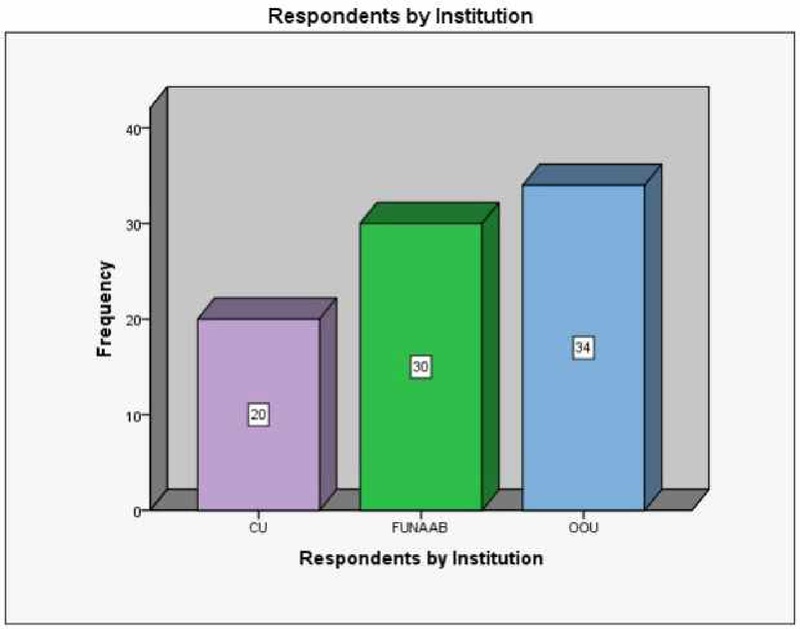
The above chart shows the representation of respondents by institution. OOU has the largest number of respondents, 34 (40.5%), followed by FUNAAB, 30 (35.7%). CU has the fewest respondents, 20 (23.8%).
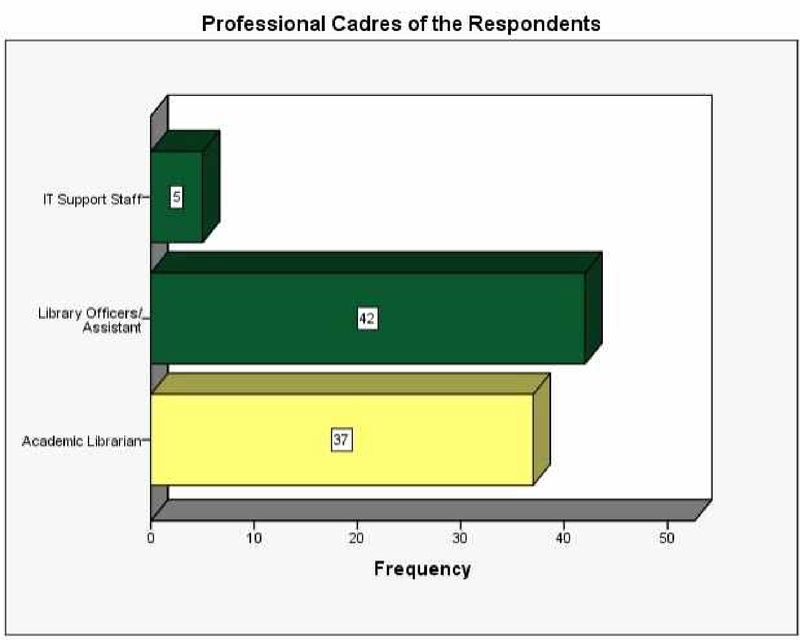
The above chart shows the representation of respondents by their professional cadres library officers and library assistance were more 42 (50.0%, followed by academic librarians, 37 (44.0%), while IT support staff has the fewest respondents, 5 (6.0%).
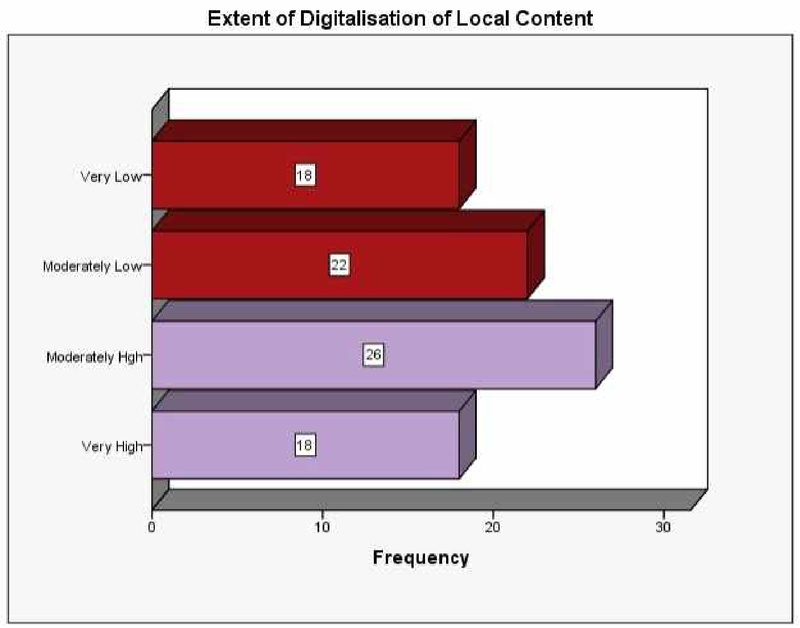
The above chart shows the extent of digitalisation of local content. The highest numbers of the respondents revealed that the extent of digitalization of local content is moderately high 26 (31.0%), followed by 22 (26.2%) who also revealed that the extent of digitalization is Moderately Low, meanwhile 18 (21.4%) revealed that the extent of digitalization is very high and another 18 (21.4%) revealed that it was very low respectively. This implies that the university libraries studied has embraced and has effectively embarked on the digitalization of local content.

Types of Local Content Academic Libraries Are Digitizing
The above table shows types of local content academic libraries are digitizing. The majority of respondents indicated that faculty expertise directories had the highest rate of digitalization, with 67 (79.8%) rating it as very high, 6 (7.1%) as moderately high, 10 (11.9%) as moderately low, and 1 (1.2%) as very low. Following this, project/thesis and dissertation records were rated very high by 50 (59.5%) respondents, moderately high by 17 (20.2%), moderately low by 12 (14.3%), and very low by 5 (6.0%). Similarly, 50 (59.5%) of respondents rated the digitalization of photographs and visual media as very high, while 30 (35.7%) rated it moderately high, and 4 (4.8%) rated it very low. Yearbooks, news bulletins, and newsletters were rated very high by 45 (53.6%) respondents, moderately high by 23 (27.4%), and very low by 16 (19.0%).
Likewise, 45 (53.6%) of respondents rated the digitalization of technical reports as very high, 27 (32.1%) as moderately high, 8 (9.5%) as moderately low, and 4 (4.8%) as very low. Regarding workshop reports and conference papers, 45 (53.6%) of respondents rated them very high, 29 (34.5%) moderately high, 3 (3.6%) moderately low, and another 3 (3.6%) very low. For letters and memorandums, 43 (51.2%) rated them very high, 38 (45.2%) moderately high, and 3 (3.6%) moderately low. Inaugural lectures were rated very high by 41 (48.8%) respondents, moderately high by 35 (41.7%), moderately low by 7 (8.3%), and very low by 1 (1.2%). Similarly, public lectures and official speeches were rated very high by 39 (46.4%) respondents, moderately high by 33 (39.3%), moderately low by 10 (11.9%), and very low by 2 (2.4%). For past question papers, 39 (46.4%) of respondents rated them very high, 26 (31.0%) moderately high, 11 (13.1%) moderately low, and 8 (9.5%) very low. Oral histories were rated very high by 34 (40.5%), moderately high by 39 (46.4%), and moderately low by 11 (13.1%). Audio and video recordings were rated very high by 23 (27.4%) respondents, moderately high by 32 (38.1%), moderately low by 21 (25.0%), and very low by 8 (9.5%). Manuscripts or unpublished reports received a very high rating from 32 (38.1%) respondents, a moderately high rating from 41 (48.8%), a moderately low rating from 8 (9.5%), and a very low rating from 3 (3.6%) Artifacts and ephemera had lower digitalization ratings, with only 12 (14.3%) rating them very high, 2 (2.4%) moderately high, 37 (44.0%) moderately low, and 33 (39.3%) very low. Lastly, textbooks and book chapters were rated very high by 6 (7.1%) respondents, moderately high by 10 (11.9%), moderately low by 32 (38.1%), and very low by 36 (42.0%).
Attitudes of the Librarians towards Digitalisation of Local Content
The above table shows the librarians’ attitudes towards digitalisation initiatives in the university libraries studied. The majority of the respondents strongly agreed 59 (70.2%) and 22 (26.2%) agreed that the digitalisation project is an opportunity to develop digital skills, 2 (2.4%) were undecided, and 1 (1.2%) disagreed. Similarly, 58 (69.0%) strongly agreed, and 22 (26.2%) agreed that digitalisation enhances research, learning, and cultural heritage preservation, while 3 (61%) were undecided, and 1 (1.2%) disagreed. Likewise, 54 (64.3%) strongly agreed, and 27 (32.1%) agreed that the digitalisation initiative enhances the reputation of the library, while 3 (3.6%) were undecided. Also, 52 (61.9%) strongly agreed, and 32 (38.1%) agreed that abuse of copyright and legal concerns is why librarians are reluctant about digitalisation initiatives. Equally, 48 (57.1%) strongly agreed, and 32 (38.1%) agreed that librarians are over-protective of traditional methods, 2 (2.4%) were undecided, and 2 (4.4%) strongly disagreed.
Moreover, 48 (57.1%) strongly agreed, 32 (38.1%) agreed that most librarians are struggling to adapt to new technologies, 2 (2.4%) were undecided, 1 (1.2%) strongly disagreed, and 1 (1.2%) disagreed. Furthermore, 46 (54.8%) strongly agreed, and agreed 30 (35.7%) that digitalisation initiatives would increase library visibility, 3 (3.6%) were undecided, 1 (1.2%) disagreed, and 4 (4.8%) strongly disagreed. Another 34 (40.5%) of the respondents strongly agreed, 47 (56.0%) agreed that librarians were concerned about potential job loss, while 2 (2.4%) were undecided and 1 (1.2%) were undecided Additionally, 31 (36.9%) strongly agreed and 37 (44.0%) agreed that librarians welcomed the idea digitalisation because it increases resources availability to users, 7 (8.3%) were undecided, 5 (6.0%) disagreed and 4 (4.8%) strongly disagreed. Also, all the respondents strongly agreed 31 (36.9%), and 49 (58.3%) agreed that the digitalisation initiative would change the future outlook of the information delivery system. Also, all the respondents strongly agreed that 35 (41.7%) and 49 (58.3%) agreed that the digitalisation initiative will increase user engagement. All the respondents were dissatisfied with the level of support they get from their library management towards the digitalisation initiative 61 (72.6%) strongly disagreed, and 23 (27.4%) disagreed.
However, the results from the above table on librarians’ attitudes towards digitalisation initiatives in university libraries revealed several positive and negative implications regarding their perceptions and readiness to embrace digitalisation. The Positive Attitudes were skill development, enhancement of library functions, reputation improvement, increased visibility, future outlook and the negative implications were copyright and legal issues, traditional methods of over-protectiveness, and struggles with technology adaptation, job security concerns and dissatisfaction with management support. Conclusively, the overall implications of these findings suggest that while there is a strong recognition among librarians about the benefits of digitalisation, significant concerns remain regarding adaptation challenges, legal issues, job security, and management support.
Reasons for Digitizing Local Content in the Academic Libraries
The above table shows the reasons for digitalising local content in the academic libraries studied. The majority of the respondents strongly agreed 60 (71.4 %), and 20 (23.82%) agreed that digitalisation increased remote accessibility, while 2 (2.4%) were undecided, and the remaining 2 (2.4%) strongly disagreed. Followed by 46 (54.8%) who strongly agreed, 34 (40.5%) who agreed that long-term cost-effectiveness is another reason for digitalisation, 1 (1.2%) were undecided, and 3 (3.6%) strongly disagreed. Also, 45 (53.6%) strongly agreed, 35 (41.7%) agreed that adaptability to 21st-Century educational requirements is the reason for the digitalisation of local content, 2 (2.4%) were undecided, and the remaining 2 (2.4%) strongly disagreed. Likewise, 42 (50.0%) strongly agreed, and 42 (50.0%) agreed that supporting research and online learning is the reason for digitalisation. Moreover, 33 (39.3%) strongly agreed, 42 (50.0%) agreed that support equity, open access and openness of knowledge are the reasons for digitalisation, 3 (3.6%) were undecided, while 3 (3.6%) disagreed, and 3 (3.6%) strongly disagreed. 32 (38.1%) strongly agreed, 39 (46. 4%) agreed that the reason for digitalisation is to enhance resource sharing and collaboration while 11 (13.1%) disagreed and 2 (2.4%) strongly disagreed. 32 (38.1%) strongly agreed, 49 (58.3%) agreed that the digitalisation of local content aids disaster recovery, 1 (1.2%) were undecided, and 2 (2.4%) strongly disagreed. 29 (34.5%) strongly agreed, and 53 (63.1%) agreed that the reason for digitalisation is that it enhanced the prospect of global visibility while 2 (2.4%) were undecided. 27 (32.1%) strongly agreed, 43 (51.2%) agreed that the promotion of local knowledge identification was the reason for digitalisation, 10 (11.9%) were undecided, 2 (2.4%) disagreed and 2 (2.4%) strongly disagreed. 24 (28.6%) strongly agreed, and 33 (39.3%) agreed that preserving cultural and historical heritage is the reason for digitalisation, 16 (19.0%) were undecided, and 11 (13.1%) strongly disagreed. The implication of these findings shows that libraries are embracing digitalization not just as a trend but as a fundamental shift in how education is delivered and experienced. By doing so, they can enhance accessibility, foster collaboration, support research, and ensure that education remains relevant in an increasingly digital world.
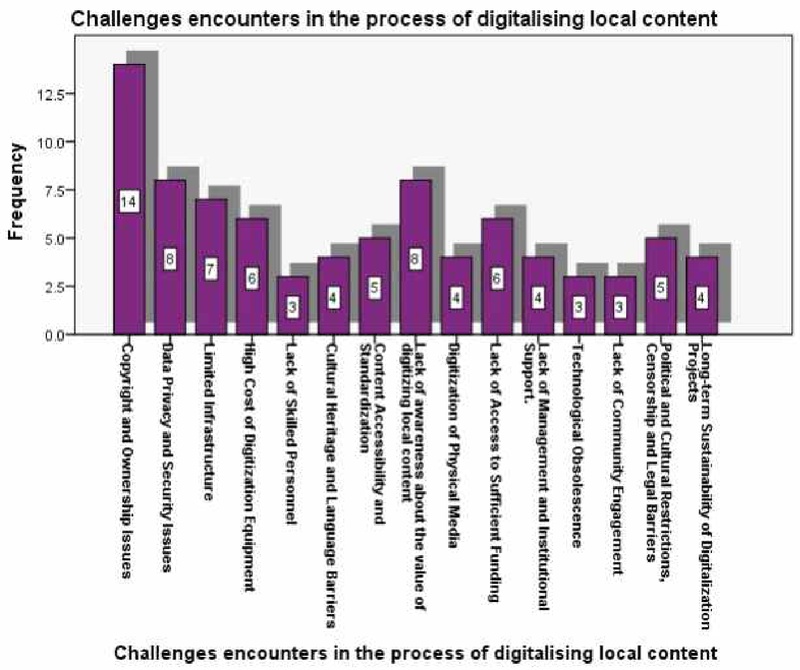
Results in Figure 4 show different challenges encountered in the process of digitalising local content in university libraries studied. Copyright and ownership issues 14 (16.7%) had the highest respondents. Followed by data privacy and security issues 8 (9.5%), similarly, lack of awareness about the value of digitizing local content 8 (9.5%), limited infrastructure was 7 (8.3%), while the high cost of digitization equipment was 6 (7.1%). Others were lack of access to sufficient funding 6 (7.1%), content accessibility and standardizationm5 (6.0%), political and cultural restrictions and censorship and legal barriers 5 (6.0%), cultural heritage and language barriers 4 (4.8%), lack of management and institutional support 4 (4.8%), digitisation of physical media 4 (4.8%), long-term sustainability of digitalisation projects 4 (4.8%), lack of skilled personnel 3 (3.6%), technological obsolescence 3 (3.6%), and lack of community engagement 3 (3.6%).
5. Discussion of findings
The extent of digitalisation of local content in the academic libraries under study, revealed that the majority of respondents 31.0% rated the extent of digitalisation as moderately high. This was in agreement with the findings of Cull (2011), who underlined that academic libraries are now positioning themselves as providers of online digital text, which suggests a significant extent of digitalisation in local content.
Faculty expertise directories had the highest digitalisation rate, with 79.8% rating it as very high, followed by projects, theses, and dissertations, rated very high by 59.5% of respondents. Photographs and visual media were also rated very high by 59.5% of respondents. Artifacts, ephemera, textbooks, and book chapters had the lowest digitalisation rates. The finding was in total agreement with the study by Levine-Clark (2014), which identified specific types of local content relevant for digitisation in open-access institutional repositories in Nigeria.
Concerning the attitudes of librarians toward digitalisation initiatives, the study revealed both positive and negative perceptions among librarians. The positive perceptions indicated that the majority of respondents acknowledged digitalisation as an opportunity for skill development 70.2% strongly agreed, 26.2% agreed, followed by its benefits for research, learning, and cultural heritage preservation 69.0% strongly agreed, 26.2% agreed. Additionally, respondents noted that digitalization enhances the library’s reputation 64.3% strongly agreed, 32.1% agreed and increases library visibility 54.8% strongly agreed, 35.7% agreed. This supported the research by Tenopir et al. (2014), which reinforced this notion by emphasizing that positive attitudes toward digitalization are crucial for the effective implementation of RDS, suggesting that librarians’ perceptions of the importance of such services can lead to increased engagement and support for digital initiatives. The negative perceptions centered on copyright abuse and legal issues 61.9% strongly agreed, 38.1% agreed, followed by resistance to change, favoring traditional methods 57.1% strongly agreed, 38.1% agreed, and struggling to adapt to new technologies 57.1% strongly agreed, 38.1% agreed). Concerns about job security 40.5% strongly agreed, 56.0% agreed and dissatisfaction with management support for digitalization 72.6% strongly disagreed, 27.4% disagreed were also reported.
The primary reasons cited for the digitalization of local content were increased remote accessibility 71.4% strongly agreed, cost-effectiveness, adaptability to modern educational requirements, support for research and online learning, open access, disaster recovery, and global visibility. Other motivations included preserving cultural and historical heritage and promoting local knowledge identification. These findings supported the view of Xia et al. (2017), which stated that digitization enables libraries to organize and analyze vast amounts of information effectively, and Ezema (2013), who also stated that digitalization increases the visibility of local authors and promotes university rankings.
The most significant challenge was copyright and ownership issues 16.7%, followed by data privacy and security concerns 9.5% and lack of awareness about digitization benefits 9.5%. Other notable issues included limited infrastructure, high costs of digitization equipment, insufficient funding, legal barriers, and lack of skilled personnel. These findings corroborated the findings of Kuntze and Moerenhout (2012), which stated that the gap in digital skills is worsened by the underfunding and inadequacy of educational institutions tasked with providing relevant training.
6. Conclusion
The study revealed that the digitalisation of local content in the three academic libraries under study is progressing but still faces notable challenges. While faculty expertise directories, theses, and dissertations have been highly digitised, other local content types such as artefacts and ephemera remain underrepresented. Librarians exhibit a mix of enthusiasm and apprehension towards digitalisation, with positive attitudes driven by improved access and institutional visibility, and negative perceptions linked to copyright concerns, resistance to change, and technological adaptation difficulties. The primary motivations for digitalisation include increased accessibility, cost-effectiveness, and preservation of cultural heritage. However, challenges such as legal restrictions, funding limitations, and inadequate infrastructure hinder full implementation. Despite these obstacles, digitalisation remains a crucial strategy for academic libraries aiming to enhance knowledge dissemination and research accessibility.
7. Recommendations
- (1) Adopting Emerging Technologies: Leveraging AI, cloud computing, and blockchain can improve digital security, storage, and accessibility.
- (2) Enhance Digital Infrastructure: Libraries should invest in modern technologies and reliable internet access to facilitate seamless digitalization endeavors.
- (3) Address Legal and Copyright Issues: Clear regulatory frameworks should be established to manage copyright concerns and data privacy.
- (4) Capacity Building: Training programmes should be introduced to equip librarians and content creators with digital skills.
- (5) Increase Awareness and Support: University management should actively support digitalization initiatives by raising awareness and allocating sufficient funding.
- (6) Encourage Open-Access and Collaboration: Libraries should promote open-access repositories and form partnerships with educational institutions and organizations to enhance digital content dissemination.
References
- Adomi, E. E., & Kpangban, E. (2010). Application of ICTs in Nigerian Secondary Schools. Library Philosophy and Practice (e-journal), 345. https://digitalcommons.unl.edu/libphilprac/345
- Aguolu, C. C., & Aguolu, I. E. (2002). Libraries and Information Management in Nigeria: Seminal Essays on Themes and Problems. Ed-Linform Services, Maiduguri.
-
Ammar, A., Chtourou, H., Boukhris, O., Trabelsi, K., Masmoudi, L., Brach, M., Bouaziz, B., Bentlage, E., How, D., Ahmed, M., Mueller, P., Mueller, N., Hsouna, H., Aloui, A., Hammouda, O., Paineiras-Domingos, L. L., Braakman-Jansen, A., Wrede, C., Bastoni, S., ... on behalf of the ECLB-COVID19 Consortium (2020). COVID-19 Home Confinement Negatively Impacts Social Participation and Life Satisfaction: A Worldwide Multicenter Study. International Journal of Environmental Research and Public Health, 17, Article No. 6237.
[https://doi.org/10.3390/ijerph17176237]

-
Asikuzzaman, Md., & Pickering, M. (2018). An Overview of Digital Video Watermarking. IEEE Transactions on Circuits and Systems for Video Technology, 28, 2131-2153.
[https://doi.org/10.1109/TCSVT.2017.2712162]
-
Boczkowski, P. J., Matassi, M., & Mitchelstein, E. (2018). How young users deal with multiple platforms: The role of meaning-making in social media repertoires. Journal of Computer- Mediated Communication, 23(5), 245-259.
[https://doi.org/10.1093/jcmc/zmy012]
-
Buchanan, Heidi, Katy Kavanagh Webb, Amy Harris Houk, & Catherine Tingelstad (2015). Curriculum Mapping in Academic Libraries. New Review of Academic Librarianship, 21(1), 94-111.
[https://doi.org/10.1080/13614533.2014.1001413]
-
Cull, B. W. (2011). Reading revolutions: Online digital text and implications for reading in academe. First Monday, 16(6).
[https://doi.org/10.5210/fm.v16i6.3340]
-
Ezema, I. (2013). Local contents and the development of open access institutional repositories in Nigeria University libraries: Challenges, strategies and scholarly implications. Libr. Hi Tech, 31, 323-340.
[https://doi.org/10.1108/07378831311329086]
-
Gendreau, O. (2015). Second-Year Integrative Project for Computer and Software Engineering Students at Polytechnique Montréal. Proceedings of the Canadian Engineering Education Association (CEEA).
[https://doi.org/10.24908/pceea.v0i0.5930]
-
Heberling, J. M., Prather, L. A., & Tonsor, S. J. (2019). The changing uses of herbarium data in an era of global change: An overview using automated content analysis. BioScience, 69(10), 812-822.
[https://doi.org/10.1093/biosci/biz094]
- IFLA (2021). Libraries and the digital environment in 2021: IFLA input to WSIS reporting. https://www.ifla.org/news/libraries-and-the-digital-environment-in-2021-ifla-input-to-wsis-reporting/, .
-
Kuntze, J.-C., & Moerenhout, T. (2012, September 12). Local content requirements and the renewable energy industry: A good match? SSRN.
[https://doi.org/10.2139/ssrn.2188607]
-
Lewis, D. W. (2013). From Stacks to the Web: The Transformation of Academic Library Collecting. Coll. Res. Libr., 74, 159-177.
[https://doi.org/10.5860/CRL-309]
-
Lor, P. J., & Britz, J. J. (2007). Is a knowledge society possible without freedom of access to information? Journal of Information Science, 33(4), 387-397.
[https://doi.org/10.1177/0165551506075327]
-
Martzoukou, K. (2021). Academic libraries in COVID19: A renewed mission for digital literacy. Library Management, 42(4-5), 266-276.
[https://doi.org/10.1108/LM-09-2020-0131]
-
Nandzik, J., Litz, B., Flores-Herr, N., Löhden, A., Konya, I. V., Baum, D., Bergholz, A., Schönfuß, D., Fey, C., Osterhoff, J., Waitelonis, J., Sack, H., Köhler, R., & Ndjiki-Nya, P. (2013). Contentus, technologies for next generation multimedia libraries, automatic multimedia processing for semantic search. Multimedia Tools Appl., 63(2), 287-329.
[https://doi.org/10.1007/s11042-011-0971-2]
-
Ocampo, L. A. (2019). Applying fuzzy AHP-TOPSIS technique in identifying the content strategy of sustainable manufacturing for food production. Environment, Development and Sustainability, 21, 1-27.
[https://doi.org/10.1007/s10668-018-0129-8]
-
Ocholla, D., & Shongwe, M. (2013). An analysis of the library and information science (LIS) job market in South Africa. South African Journal of Libraries and Information Science, 79(1), 35-43. https://sajlis.journals.ac.za/pub/article/view/113/122
[https://doi.org/10.7553/79-1-113]
- Ogbomo, M. O., & Ogbomo, E. F. “Availability and Accessibility of ICTs in the Rural Communities of Delta State, Nigeria” (2008). Library Philosophy and Practice (e-journal), 187. https://digitalcommons.unl.edu/libphilprac/187
-
Okunlaya, R. O., Abdullah, N. S., & Alias, R. A. (2022). Artificial intelligence (AI) library Services innovative conceptual framework for the digital transformation of university education. Libr. Hi Tech, 40, 1869-1892.
[https://doi.org/10.1108/lht-07-2021-0242]
- Olubiyo, Peter Olubunmi; Achebe, Nancy E. (Prof.); & Olubiyo, Lydia M. (2022). Digitization of Information Resources in University Libraries in Nigeria: Challenges and Way Forward. Library Philosophy and Practice (e-journal), 7444. https://digitalcommons.unl.edu/cgi/viewcontent.cgi?article=14402&context=libphilprac, .
- Otubelu, B. N., & Ume, L. E. (2015). Digitization of library resources in academic libraries: Challenges and implication. IOSR Journal of Mobile Computing & Application (IOSR-JMCA), 2(2), 35-40. https://www.iosrjournals.org/iosr-jmca/papers/Vol2-issue2/F0223540.pdf
- Oyewusi, F. O., & Oyeboade, S. A. (2009). An empirical study of accessibility and use of library resources by undergraduates in a Nigerian State University of Technology. Library Philosophy and Practice (e-journal), 277. https://digitalcommons.unl.edu/libphilprac/277
-
Ozonuwe, O. S., Ayomide, O. A., & Ohwofasa, F. (2021). Use of Social Media and Mobile Apps for Academic Activities and Resource Sharing Among Postgraduate Students of Covenant University, Canaanland, Ota, Ogun State, Nigeria. Inter. J. Acad. Lib. Info. Sci. 9(5), 200-207.
[https://doi.org/10.14662/IJALIS2021.115]
-
Oztemel, E., & Gursev, S. (2018). Literature review of Industry 4.0 and related technologies. Journal of Intelligent Manufacturing, 31, 127-182.
[https://doi.org/10.1007/S10845-018-1433-8]
-
Payne, E. H., Dahl, A. J., & Peltier, J. W. (2021). Digital servitization value cocreation framework for AI services: A research agenda for digital transformation in financial service ecosystems. Journal of Research in Interactive Marketing, 15(2), 200-222.
[https://doi.org/10.1108/JRIM1220200252]
-
Shen, M. R., Tzioumis, E., Andersen, E., Wouk, K., McCall, R., Li, W., Girdler, S., & Malloy, E. (2021). Impact of Mentoring on Academic Career Success for Women in Medicine: A Systematic Review. Academic Medicine, 97, 444-458.
[https://doi.org/10.1097/ACM.0000000000004563]
-
Solove, D J., & Schwartz, P M. (2022) ALI Data Privacy: Overview and Black Letter Text 68. UCLA Law Review, 1252. Available at SSRN: https://ssrn.com/abstract=3457563, .
[https://doi.org/10.2139/ssrn.3457563]
-
Solove, D. J. (2019). ALI Data Privacy: Overview and Black Letter Text [Essay]. American Law Institute. https://papers.ssrn.com/sol3/papers.cfm?abstract_id=3457563
[https://doi.org/10.2139/ssrn.3457563]
-
Song, J., Sheng, M., Quek, T. Q. S., Xu, C., & Wang, X. (2017). Learning-Based Content Caching and Sharing for Wireless Networks. IEEE Transactions on Communications, 65, 4309-4324. https://ieeexplore.ieee.org/document/7944647
[https://doi.org/10.1109/TCOMM.2017.2713384]
-
Tenopir, C., Sandusky, R. J., Allard, S., & Birch, B. (2014) Research Data Management Services in Academic Research Libraries and Perceptions of Librarians. Library & Information Science Research, 36, 84-90. https://www.scirp.org/reference/referencespapers?referenceid=2479955
[https://doi.org/10.1016/j.lisr.2013.11.003]
- Tordo, S., Warner, M., Manzano, O. E., & Anouti, Y. (2013). Local content policies in the oil and gas sector. Washington, DC: International Bank for Reconstruction and Development / The World Bank. https://openknowledge.worldbank.org/server/api/core/bitstreams/1cfe6de2-02f0-538b-8d17-73386f2fb663/content
- UNESCO (2022). World Digital Library. https://www.unesco.org/en/mondiacult/digital-library
- Uzuegbu, C. P. (2012). The Role of University Libraries in Enhancing Local Content Availability in the Nigerian Community. Library Philosophy and Practice (e-journal), 733. https://digitalcommons.unl.edu/libphilprac/733
-
Van Dijk, J. A. G. M. (2017). Digital divide: Impact of access. In P. Rössler, C. A. Hoffner, & L. van Zoonen (Ed.), The international encyclopedia of media effects (pp. 1-11). Wiley.
[https://doi.org/10.1002/9781118783764.wbieme0043]
-
Walters, W. H. (2013). E-books in Academic Libraries: Challenges for Acquisition and Collection Management. portal: Libraries and the Academy, 13, 187-211.
[https://doi.org/10.1353/PLA.2013.0012]
-
Warth, A., Cortis, J., Fink, L., Fisseler‐Eckhoff, A., Geddert, H., Hager, T., Junker, K., Kayser, G., Kitz, J., Länger, F., Morresi‐Hauf, A., Ott, G., Petersen, I., Stenzinger, A., Soltermann, A., Ting, S., Tischler, V., Vollmer, E., Schnabel, P., & Weichert, W. (2012). Training increases concordance in classifying pulmonary adenocarcinomas according to the novel IASLC/ATS/ ERS classification. Virchows Archiv, 461, 185-193.
[https://doi.org/10.1007/s00428-012-1263-6]
-
Windhager, F., Federico, P., Schreder, G., Glinka, K., Dörk, M., Miksch, S., & Mayr, E. (2019). Visualization of Cultural Heritage Collection Data: State of the Art and Future Challenges. IEEE Transactions on Visualization and Computer Graphics, 25, 2311-2330.
[https://doi.org/10.1109/TVCG.2018.2830759]
-
Xia, Feng., Wang, Wei., Bekele, T. M., & Liu, Huan (2017). Big Scholarly Data: A Survey. IEEE Transactions on Big Data, 3, 18-35.
[https://doi.org/10.1109/TBDATA.2016.2641460]
-
Zhang, C., & Guo, J. (2017). China’s international research collaboration: Evidence from a panel gravity model. Scientometrics, 113(2), 1129-1139.
[https://doi.org/10.1007/s11192-017-2513-9]
-
Zhang, X., Xu, Y., & Ma, L. (2023). Information technology investment and digital transformation: the roles of digital transformation strategy and top management. Bus. Process. Manag. J., 29, 528-549.
[https://doi.org/10.1108/bpmj-06-2022-0254]
Ozonuwe Opene Sunday is currently pursuing a Doctor of Philosophy (PhD) in Library and Information Studies, with a research focus on “The Role of Consortium Building and ICT Infrastructure in Enhancing Central E-Library Systems among Nigerian Universities.” He holds a Master’s degree in Library and Information Studies, as well as a Bachelor of Education (B.Ed.) in Educational Foundations and Library Studies. Presently, he serves as Librarian I at Crawford University, where he oversees the operations and development of the university’s e-library. In this role, he is responsible for managing digital resources, supporting user access, and integrating emerging technologies to enhance academic research and information retrieval. He is a prolific academic, with over 25 journal articles published in both local and international journals. He has also contributed to numerous book chapters across a range of scholarly publications. His research and professional interests include: Emerging technologies in libraries, smart cities and their implications for information systems, the Internet of Things (IoT), cyber security in digital information management, artificial intelligence (AI) in library operations, social media integration into library services, knowledge management and digital literacy, among others. he is deeply committed to advancing the field of library and information science through scholarly research, innovation, and the strategic integration of technology.
Aluko, Oluwakemi Omobolanle is an Assistant Librarian I at Crawford University Library, located in Igbesa, Ogun State, Nigeria. With a strong academic and professional background in library and information science, she plays a vital role in supporting the teaching, learning, and research missions of the university. Her responsibilities include reference services, user education, cataloguing, classification, and the promotion of information literacy among students and staff. Oluwakemi is passionate about enhancing access to knowledge and improving library services through the integration of digital tools and innovative library practices. She is also committed to continuous professional development and contributing to the advancement of librarianship in Nigeria.
Ajibola, Rotimi Racheal is a dedicated researcher, seasoned consultant, and accomplished information broker. She is currently pursuing a Doctor of Philosophy (PhD) in Library and Information Studies at the prestigious University of Ibadan, Nigeria. She holds a Master’s degree in Library and Information Studies, also from the University of Ibadan, where she developed a strong academic foundation and honed her expertise in information science, research methodologies, and knowledge management. Ajibola is a professional member of several esteemed bodies, including the Nigerian Library Association (NLA) and the Librarians’ Registration Council of Nigeria (LRCN), among others. Her affiliation with these organisations reflects her commitment to continuous professional development and active engagement with the wider library and information science community. Over the years, she has authored and co-authored numerous scholarly articles, which have been published in both local and international journals. Her research interests span a broad spectrum of topics within library and information science, and her work continues to contribute significantly to academic discourse and practical advancements in the field. With a rich blend of academic, professional, and consulting experience, Ajibola, Rotimi Racheal remains a dynamic force in the realm of information science, dedicated to knowledge sharing, innovation, and the empowerment of communities through access to information.
Giwa, Ayomide Ayoola (Nee Ogundana) is a Librarian I and Lecturer II at Venite University, Iloro Ekiti, Nigeria, with a strong interdisciplinary background in law and library science. She holds degrees in Library and Information Science, Law, and Legal Practice, and is currently pursuing a Ph.D. in Library and Information Science. Her research interests span information literacy, legal information management, Artificial Intelligence and Machine Learning Applications in Libraries, Knowledge sharing practices, and strategic innovations for academic library services. She has authored and co-authored several scholarly publications in reputable journals, contributing to the discourse on Emerging Technologies and sustainable library practices. A qualified barrister and advocate of the Supreme Court of Nigeria, she is a member of the Nigerian Bar Association, the International Federation of Women Lawyers, and the Nigerian Library Association. Her current focus includes doctoral research on Emerging Technologies in libraries and collaborative projects on ICT adoption, AI utilization, and information literacy in Nigerian academic institutions.
Olaseigbe Yetunde Faith is a Senior Librarian at the Forestry Research Institute of Nigeria Headquarters in Ibadan, Oyo State. With a strong educational foundation from the prestigious Ahmadu Bello University, Zaria, Kaduna State, where she had her first degree in English and literary studies, a Master’s degree in Library and Information Science from the University of Ibadan, and a PhD (in view) in Information Resources Management at Babcock University, Ilishan Remo, Ogun State. With a specialization in Cataloging and Classification, she has enhanced her expertise through international exposure, including a notable visit to the prestigious Library of Congress in the United States, where she gained hands-on experience in cataloguing practices. Her research interests include cataloguing practices, entrepreneurship skills in libraries, long-term digital practices, and artificial intelligence. An /active member of the Nigeria Library Association (NLA) and Librarians’ Registration Council of Nigeria (LRCN), her research works are indexed in reputable databases such as Scopus, Google Scholar, and ResearchGate.
Ogunojemite Abosede Tola is a reference librarian and also College of Pharmacy Librarian at Afe Babalola University, Ado-Ekiti, Ekiti State with academic education spanning to an ongoing PhD programme in library nd information Science at Federal university Oye Ekiti. Has interest in research publications especially within Southwest Nigeria with notable journals like Communicate Journal of Library Science, Samaru Journal of Information Studies etc documented on SCOPUS, ORCID and Google Scholar. A chattered librarian with Library Registration (LRCN) Librarian Council of Nigeria and also a member of Nigeria Library Association (NLA) Ekiti State Chapter.
Giwa Ayokunle Oluwadamilola is a lecturer and librarian with a strong educational background, holding a Bachelor’s degree in English Language and Education from the University of Nigeria and a Master’s degree in Library and Information Science from the University of Ibadan. He is currently pursuing a PhD in Library and Information Science from Federal University Oye. Currently serving as a Librarian 1 and Head of Technical Services at Ekiti State Polytechnic, his research interests include information/digital literacy, research competence, artificial intelligence, attitude towards plagiarism, librarianship among others. He is a member of the Nigeria Library Association (NLA) and Teachers Registration Council of Nigeria (TRCN). Recently, he co-authored an institutional-based research sponsored by TETFUND on emotional intelligence, digital literacy skills, training and research competence of academic librarians in Southwest Nigeria. His research works are documented on Google Scholar, ORCID, and ResearchGate.